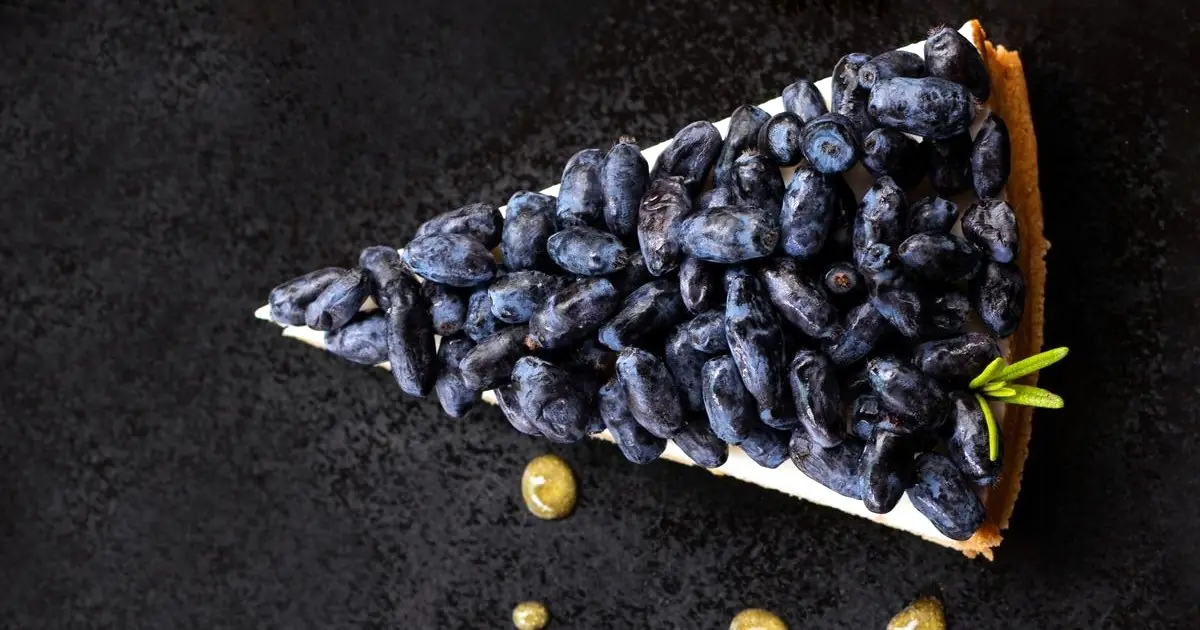
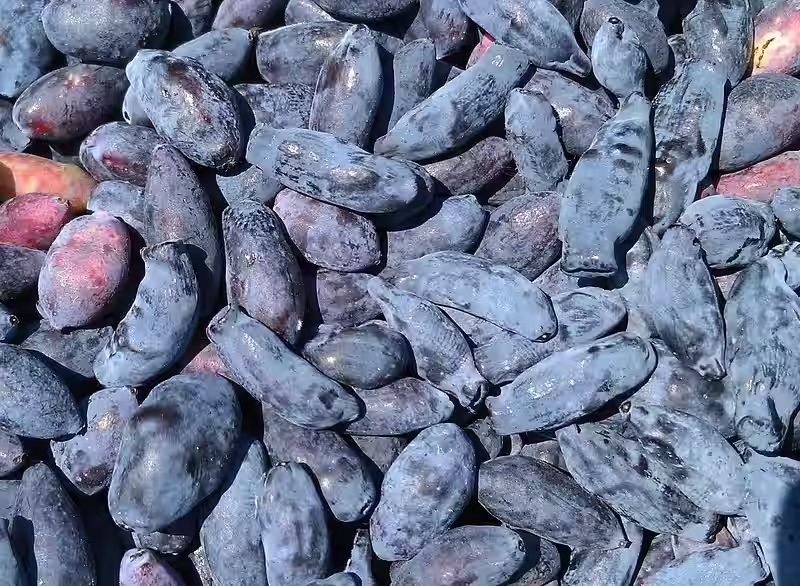
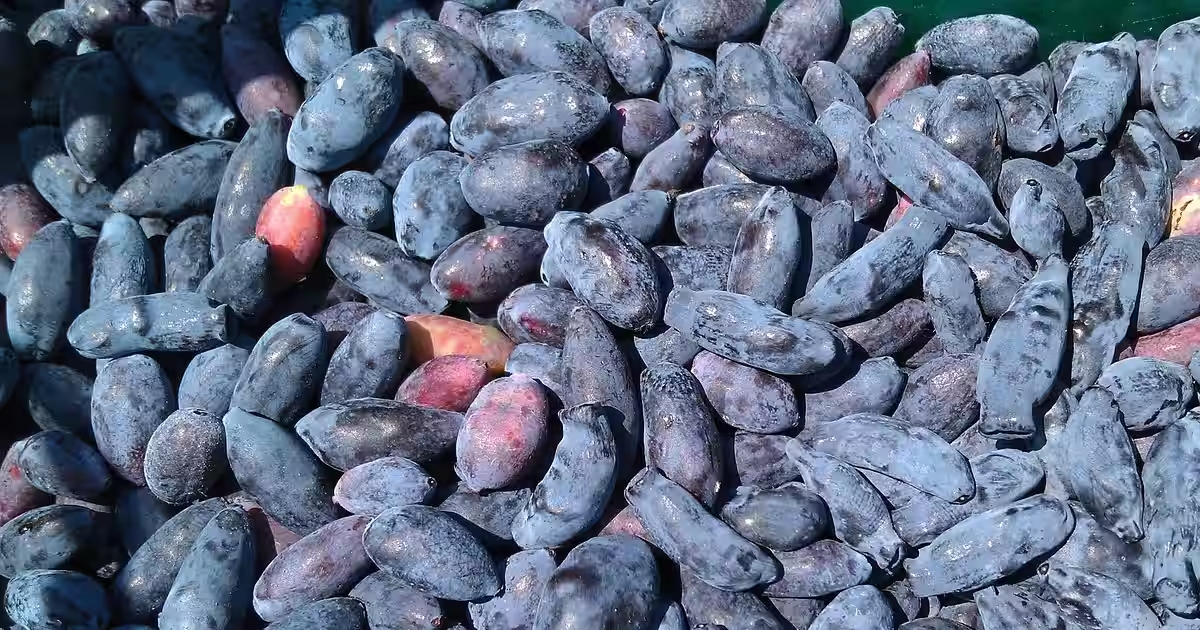
Honeyberries are small, dark blue berries known for their vitamin C and high concentration of anthocyanins, the plant pigments responsible for their deep color. Also called haskap berries, they contain natural sugars, organic acids, minerals, fiber, and other plant compounds.
Their nutritional value is not identical from one berry to another. The variety, growing conditions, weather, ripeness, and storage can all influence the amount of vitamin C, sugars, and anthocyanins. This means published figures should be treated as research-based estimates rather than exact values for every serving of honeyberries.
If you are looking for honeyberry nutrition facts, here is what research tells us about their vitamins, minerals, calories, and other nutrients.
Honeyberry Nutrition Facts per 100 Grams
The table below summarizes selected values reported in scientific studies of Lonicera caerulea, the species commonly known as haskap or honeyberry. It is not a universal nutrition label for every variety.
| Nutrient or compound | Approximate amount per 100 g of fresh berries |
|---|---|
| Calories | No single well-established value across varieties |
| Total sugars | About 1.5–2.6 g |
| Vitamin C | About 15–187 mg |
| Potassium | About 300–500 mg |
| Magnesium | About 8–16 mg in some studies |
| Phosphorus | About 49–225 mg |
| Calcium | About 44–108 mg |
| Sodium | About 1–8 mg |
| Total anthocyanins | About 86–655 mg in selected cultivars |
A note about these figures: The ranges come from different studies and cultivars, not from one standardized analysis of a single batch of fruit. Mineral results vary considerably between studies, and the anthocyanin figures are representative of selected varieties rather than a guaranteed amount. The calorie value is not included as a precise number because the reviewed research does not establish one reliable, general figure for all fresh honeyberries.
Sources: Gołba et al. (2020), Molecules; selected-cultivar research summarized in that review.
Calories and Macronutrients in Honeyberries
How many calories are in honeyberries?
Honeyberries are fresh fruit, so they can be a useful addition to a balanced diet. However, a precise calorie figure should come from a nutritional analysis of the specific variety or product rather than being assumed to apply to every haskap berry.
The energy content of fruit depends largely on its carbohydrate content, including natural sugars. Water content also matters. When berries are dried, removing water concentrates the nutrients and sugars per 100 grams, so dried honeyberries should not be compared directly with fresh fruit on a weight-for-weight basis.
If you are tracking calories closely, check the nutrition label on packaged honeyberries or dried haskap products when one is available.
Carbohydrates and natural sugars
Honeyberries contain naturally occurring sugars, mainly fructose and glucose, with smaller amounts of sucrose. A review of the research reported total sugar concentrations of approximately 1.5–2.6 g per 100 g of fresh berries, depending on the cultivar.
That range is relatively low compared with many sweet fruits, but it should not be treated as a guarantee for every variety. Sugar levels can change with sunlight exposure, growing conditions, and harvest time.
Honeyberries also contain organic acids, including citric, malic, and quinic acids. These contribute to their distinctive sweet-tart taste.
Fiber, protein, and fat
Haskap berries contain dietary fiber, along with smaller amounts of protein and fat. A study of blue honeysuckle fruit identified fiber and protein among its notable nutritional components.
However, the exact quantities are not consistently reported across cultivars and studies. For that reason, it is better not to assign a single precise fiber, protein, or fat value to all honeyberries without a specific, verifiable nutrition dataset.
Whole berries are generally the most straightforward way to enjoy their naturally occurring fiber. Juicing can leave some of that fiber behind, depending on how the juice is prepared.
Vitamins in Honeyberries
Vitamin C
Vitamin C is one of the most notable nutrients in honeyberries. It contributes to normal immune function, collagen formation, wound healing, and the absorption of iron from plant foods.
Research has found substantial differences in vitamin C levels among haskap cultivars. A review published in Molecules reported values ranging from approximately 15–25 mg per 100 g in some studies to as much as 187 mg per 100 g in certain cultivars.
That wide range is important. It means honeyberries can be a valuable source of vitamin C, but the amount you get depends on the fruit you eat. It would be misleading to assume that every 100 g serving provides the highest reported quantity.
Growing conditions and weather can influence vitamin C levels. Ripeness, harvesting time, and storage may also affect the amount that remains in the fruit.
Other vitamins
Haskap berries contain a range of plant compounds and have been investigated for several vitamins, including vitamin E and other antioxidant-related compounds. However, the available research does not provide equally consistent, widely applicable figures for every vitamin.
Vitamin C is the best-documented vitamin in much of the haskap literature. A detailed vitamin table should only include additional vitamins when the source reports their amounts using clear units and a defined sample.
Minerals in Haskap Berries
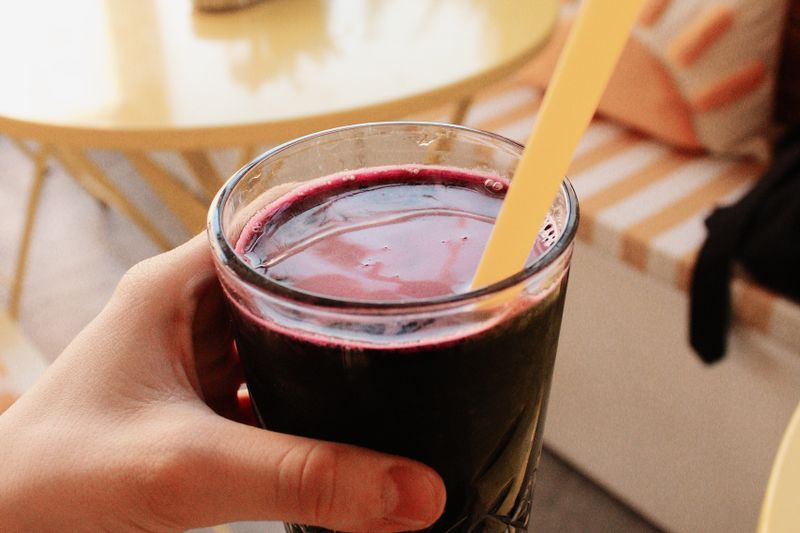
Honeyberries contain several minerals involved in normal body functions. The reported amounts vary between studies, so the figures in the table above should be understood as approximate research ranges.
Potassium
Potassium is involved in fluid balance, nerve signaling, and muscle contraction. It also plays a role in maintaining normal blood pressure.
Potassium is generally the most abundant mineral reported in haskap berries, although its concentration differs among varieties and growing conditions.
Magnesium
Magnesium supports normal muscle and nerve function and contributes to energy metabolism. Haskap berries provide some magnesium, but the quantity is not sufficiently consistent across studies to describe them as a particularly rich source without specifying the variety and measured amount.
Calcium and phosphorus
Calcium is needed for healthy bones and teeth, while phosphorus contributes to bone structure and energy metabolism. Both have been detected in haskap berries, although the reported concentrations vary between studies.
Honeyberries can contribute to overall mineral intake, but they should be considered one part of a varied diet rather than a replacement for more concentrated mineral sources.
Sodium
The studies reviewed generally report relatively low sodium levels in fresh haskap berries. This is consistent with their use as a fruit in meals and snacks, although anyone following a medically prescribed diet should consider the overall diet and any processed products made from the berries.
Anthocyanins: What Gives Honeyberries Their Deep Blue Color?
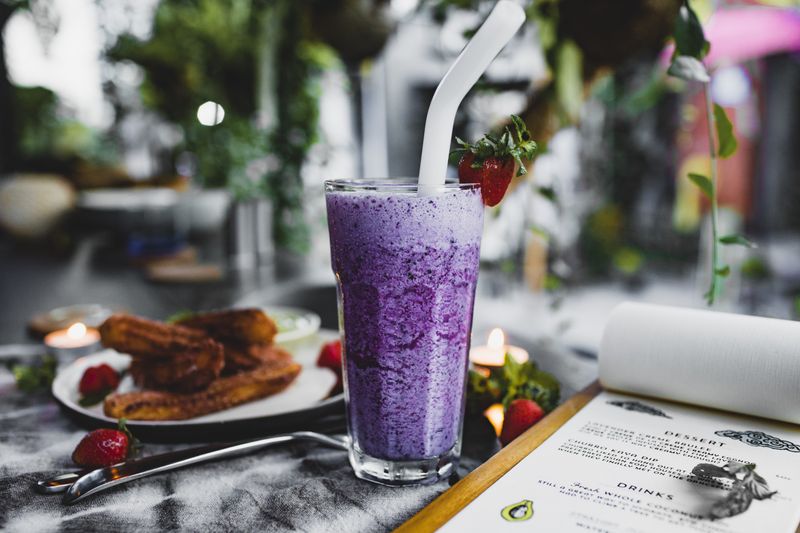
One of the most distinctive features of honeyberry nutrition is its anthocyanin content.
Anthocyanins are water-soluble pigments belonging to the flavonoid family. They give many red, purple, and blue fruits their characteristic colors. In haskap berries, they are among the most important groups of polyphenols.
Research has found that anthocyanin levels can vary considerably between cultivars. In a review by Gołba and colleagues, selected cultivars had reported total anthocyanin values ranging from roughly 86 to 655 mg per 100 g of fresh fruit. These are study-specific results, not a fixed nutritional value for every honeyberry.
Cyanidin-3-O-glucoside: the main anthocyanin
The predominant anthocyanin in haskap berries is generally cyanidin-3-O-glucoside, often abbreviated as C3G. Research reviews report that it can account for approximately 76–92% of total anthocyanins, depending on the material studied and analytical method.
Other anthocyanins have also been identified, but C3G is usually the main contributor to the berries’ characteristic dark color and anthocyanin profile.
Anthocyanins have attracted scientific interest because of their antioxidant activity and their potential roles in biological processes. Laboratory studies have shown that these compounds can interact with reactive molecules, but laboratory results do not automatically mean that eating honeyberries will prevent or treat a disease.
The amount of anthocyanins in a serving depends on the cultivar, growing environment, ripeness, and how the berries are handled after harvest.
How do anthocyanins differ from anthocyanidins?
The terms are related but not interchangeable. Anthocyanidins are the underlying pigment compounds, while anthocyanins are forms in which these pigments are attached to sugar molecules or other groups.
Cyanidin is an anthocyanidin; cyanidin-3-O-glucoside is an anthocyanin. This distinction matters when reading nutrition studies because researchers may report different forms or use different analytical methods.
Other Bioactive Compounds in Honeyberries

Anthocyanins are not the only compounds of interest in haskap berries. Studies have also identified:
- Phenolic acids, including chlorogenic acid, which are part of the fruit’s broader polyphenol profile.
- Flavonols, including quercetin-related compounds.
- Flavanols and proanthocyanidins, which are found in many berries.
- Iridoids, a group of plant compounds that is of particular interest in research on Lonicera caerulea.
The quantities of these compounds differ among varieties and can also be affected by the methods used to extract and measure them.
These compounds help explain why haskap berries are studied as a polyphenol-rich fruit. Their presence is not, by itself, proof that eating the fruit will produce a specific medical benefit.
For a closer look at the possible health effects and the limits of current evidence, read our article on Haskap Berry Benefits and Side Effects.
Fresh vs. Frozen Honeyberries: Does Nutrition Change?
Freezing is a practical way to preserve honeyberries beyond their short harvest season. Frozen fruit can retain much of its nutritional value, although the result depends on the freezing method, storage time, and handling.
Some compounds may decline during storage, while changes in water content or tissue structure can affect measured concentrations. A change in concentration does not necessarily mean that the total amount of a nutrient in the original batch has increased.
Dried honeyberries are different. Removing water concentrates sugars, minerals, and other components per 100 g. Dried products may also contain added sugar, so it is worth checking the ingredient list.
Heating berries to make jam, juice, or sauce can also affect certain compounds, including vitamin C and anthocyanins. The degree of change depends on the temperature, processing time, and recipe.
For everyday use, fresh or unsweetened frozen honeyberries are convenient options. Both can be added to oatmeal, yogurt, smoothies, or fruit salads.
Honeyberry vs. Blueberry Nutrition
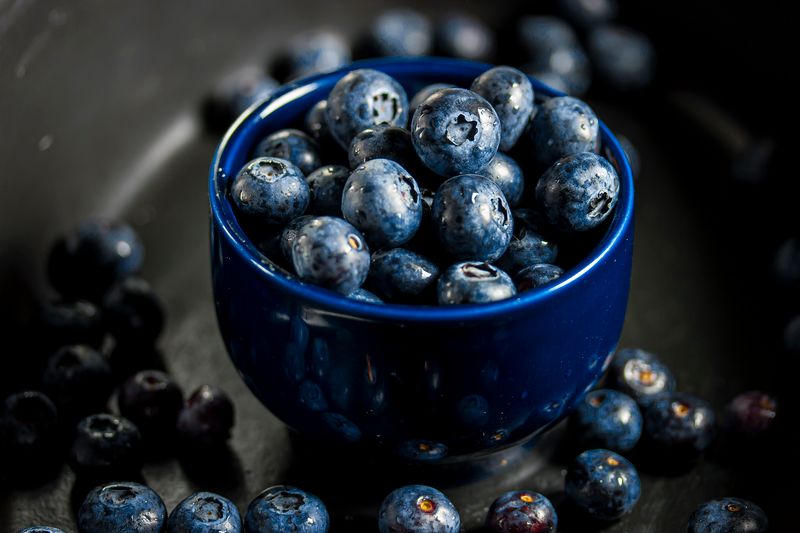
Honeyberries and blueberries are both dark-colored berries, but their nutritional profiles are not identical.
Haskap berries are particularly notable for their variable but sometimes high vitamin C content and their anthocyanin profile. Blueberries also contain anthocyanins, fiber, and other polyphenols. The actual difference depends on the cultivars being compared and the way the fruit is analyzed.
It is therefore not accurate to claim that one berry is always more nutritious than the other in every respect. A fair comparison should use values measured on the same basis—ideally per 100 g of fresh fruit—and should distinguish individual nutrients from laboratory measures of antioxidant activity.
For a more detailed comparison of their nutrients, taste, and potential health benefits, see our article: Honeyberry vs. Blueberry: Nutrition, Taste, and Health Benefits.
How to Add Honeyberries to Your Diet
Honeyberries have a sweet-tart flavor that works well in both simple snacks and recipes. You can:
- Add fresh or frozen berries to plain yogurt or oatmeal.
- Blend them into a smoothie with other fruit.
- Mix them into homemade fruit sauces.
- Add them to salads or use them as a topping for porridge.
- Use them in baking, remembering that heat can affect some sensitive compounds.
If you use honeyberries in jam or sweetened juice, remember that added sugar can substantially change the nutritional profile of the finished product.
There is no single serving size that is required to obtain their nutrients. A portion that fits comfortably into your usual fruit intake is a reasonable place to start.
Readers Also Enjoyed
Frequently Asked Questions
Are honeyberries high in vitamin C?
They can be. Studies have reported vitamin C levels ranging from roughly 15 mg to as much as 187 mg per 100 g, depending on the cultivar and growing conditions. Not every variety reaches the upper end of this range.
How many calories are in 100 g of honeyberries?
There is no single calorie figure that can confidently be applied to all haskap varieties based on the research reviewed here. For an accurate value, use a nutrition analysis for the specific variety or a reliable product label.
Do honeyberries contain a lot of sugar?
Published research has reported approximately 1.5–2.6 g of total sugars per 100 g of fresh berries in the cultivars studied. Sugar content varies, so this range should not be treated as universal.
Are honeyberries a good source of anthocyanins?
They can be a rich source. Selected cultivars have shown substantial anthocyanin concentrations, with cyanidin-3-O-glucoside generally the dominant compound. The amount varies by variety, maturity, growing conditions, and analytical method.
Are frozen honeyberries as nutritious as fresh ones?
Frozen berries can retain much of their nutritional value and are a convenient alternative to fresh fruit. Storage and processing can affect some nutrients, so the exact composition may differ.
Are haskap berries and honeyberries the same fruit?
The names are commonly used for edible berries from Lonicera caerulea. Commercial naming can vary by region and cultivar, but the terms often refer to the same species.
Sources
- Gołba M, Sokół-Łętowska A, Kucharska AZ. Health Properties and Composition of Honeysuckle Berry (Lonicera caerulea L.): An Update on Recent Studies. Molecules. 2020;25(3):749.
- Evaluation of the Chemical Composition of Selected Varieties of L. caerulea var. kamtschatica and L. caerulea var. emphyllocalyx. 2023.
- Bioactive Compounds, Antioxidant, and Antibacterial Properties of Lonicera caerulea Berries: Evaluation of 11 Cultivars.
- Guo L, Qiao J, Yan W, et al. Critical Review on Anthocyanins in Blue Honeysuckle (Lonicera caerulea L.) and Their Function. Plant Physiology and Biochemistry. 2023. View the review on PubMed.
- A Systematic Review of Cardio-Metabolic Properties of Lonicera caerulea L.