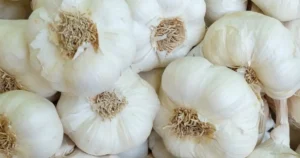
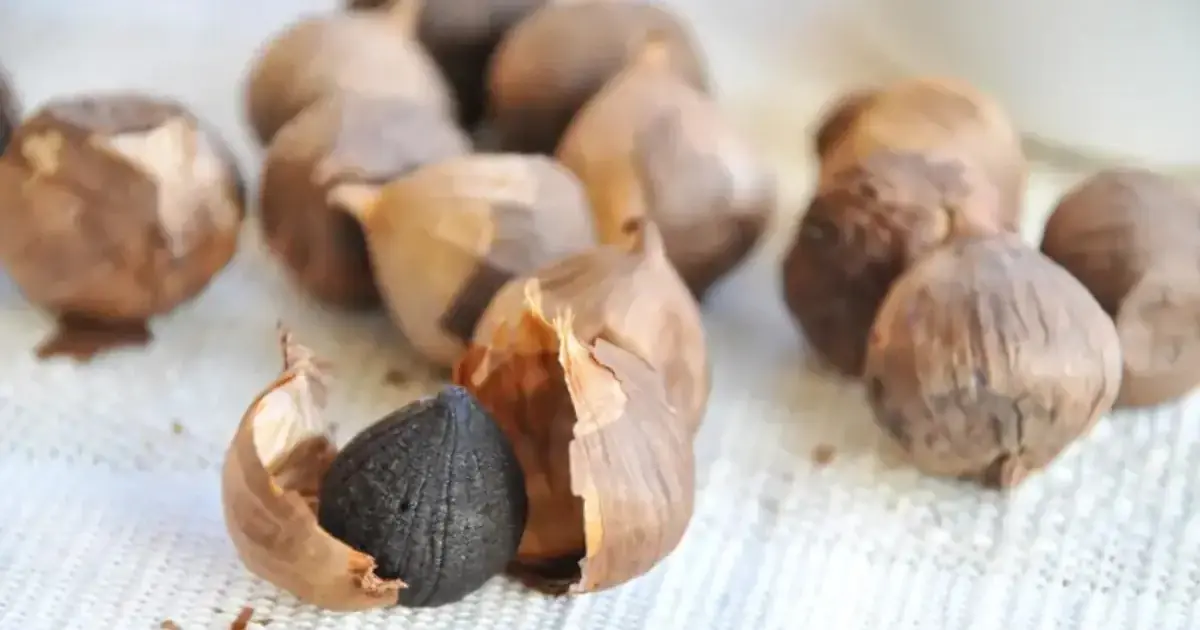
Black garlic is made by aging whole garlic bulbs at a carefully controlled temperature and humidity for several weeks. The heat gradually turns the cloves dark, soft, and sweet, with a flavor often compared to balsamic vinegar, molasses, or tamarind. Although many online recipes recommend using a rice cooker or slow cooker, these appliances may not maintain safe, consistent conditions over such a long period. For reliable results, black garlic needs controlled processing conditions and appropriate temperature monitoring.
In this guide, you’ll learn how black garlic is made, how temperature and time affect the result, what to know about different preparation methods, and how to handle homemade black garlic safely.
This article is part of our complete guide to garlic. For a full overview, see Garlic: Nutrition, Health Benefits and Bioactive Compounds.
What Is Black Garlic and How Is It Made?
Black garlic starts as ordinary fresh garlic. During prolonged exposure to heat and humidity, the cloves gradually change color, texture, aroma, and taste.
The process is often called fermentation, but black garlic production does not necessarily rely on active microorganisms. Much of the transformation comes from heat-driven chemical reactions, including Maillard reactions, along with changes in the garlic’s natural compounds.
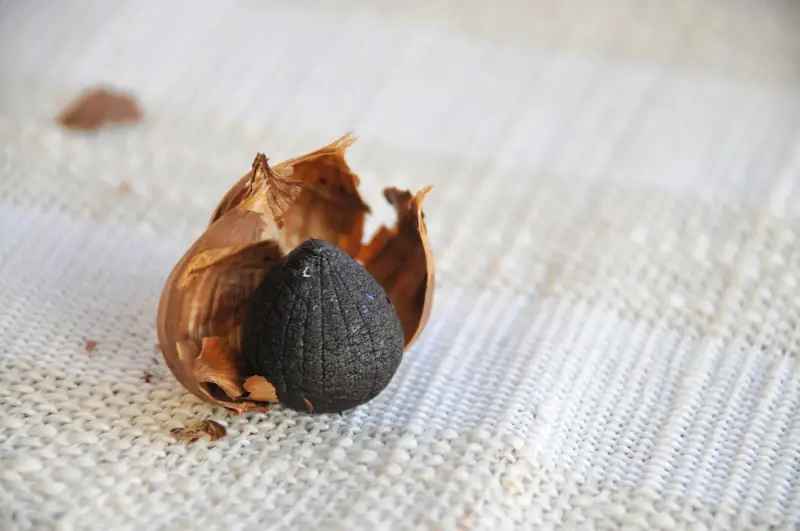
Fresh garlic has a sharp, pungent flavor. Black garlic is usually much milder, sweeter, and more complex. Its cloves become dark brown or black and develop a soft, chewy, sometimes jelly-like texture.
The transformation also changes its chemical composition. Research has found changes in compounds such as S-allyl cysteine and certain polyphenols during processing. However, this does not mean that black garlic is automatically healthier than fresh garlic in every respect.
What You Need to Make Black Garlic at Home
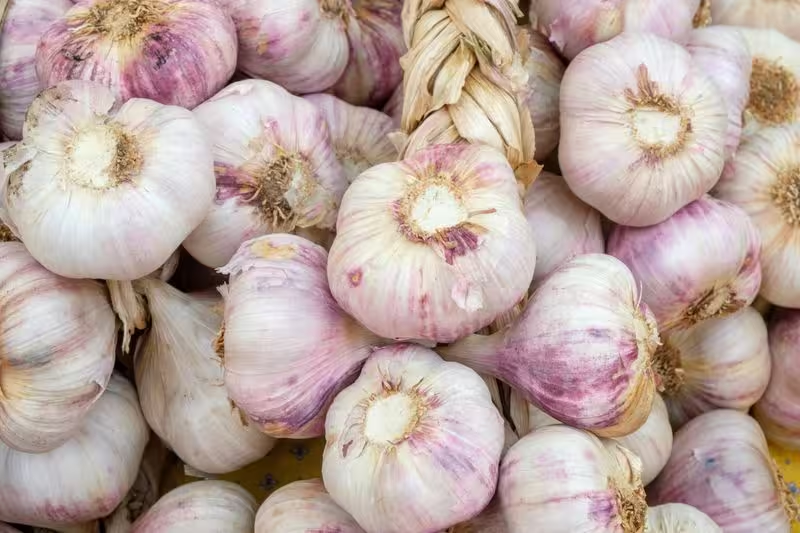
Before choosing a method, it helps to understand what the process actually requires. Making black garlic is not simply a matter of leaving garlic in a warm appliance until it turns black.
Choosing the Right Garlic
Start with fresh, firm garlic bulbs.
Look for bulbs that are:
- Firm to the touch, without soft or mushy areas.
- Free from visible mold.
- Dry on the outside, with intact papery skins.
- Free from signs of rot or unusual discoloration.
Whole bulbs are commonly used because the outer skins help protect the cloves during processing. Avoid starting with damaged garlic or bulbs that already show signs of spoilage.
Choosing the Right Equipment
The equipment matters because black garlic requires stable conditions over an extended period.
Commercial producers use controlled processing equipment designed to maintain temperature and humidity. A suitable setup also needs reliable temperature monitoring throughout the process.
A standard rice cooker or slow cooker may seem convenient, but neither should be assumed to provide the conditions needed for safe black garlic production. Their temperatures can vary, and they may operate for days or weeks without adequate monitoring.
If you cannot maintain and verify the required processing conditions, buying commercially produced black garlic is the safer option.
Black Garlic Temperature and Time
Temperature and processing time strongly influence the final color, texture, sweetness, and aroma of black garlic.
Published research describes black garlic production at temperatures commonly ranging from 60°C to 90°C (140°F to 194°F), often with high relative humidity. One review describes conditions of 60–90°C and 80–90% relative humidity, while food-safety guidance discusses a similar temperature range and humidity of 70–90%.
These are ranges reported in the literature, not a universal home recipe. The appropriate conditions and processing time depend on the equipment, humidity, garlic size, and the production method.
| Factor | What to know |
|---|---|
| Temperature | Published methods commonly use 60–90°C (140–194°F) |
| Humidity | High humidity is commonly used to limit excessive drying |
| Processing time | Usually several weeks, depending on the method and conditions |
| Garlic preparation | Whole, intact bulbs are commonly used |
| Temperature monitoring | Essential for verifying consistent processing conditions |
| Storage | Depends on the finished product’s properties and validated storage guidance |
How Long Does It Take to Make Black Garlic?
Black garlic typically takes several weeks to produce. There is no single processing time that works for every batch.
Higher temperatures can speed up some of the changes, but faster processing does not necessarily produce better flavor or texture. Research has found that temperature affects the quality of the final product, including its color and taste.
It is also important not to assume that garlic is ready simply because the outside looks dark. Color alone does not establish that a batch has been processed safely or reached a suitable final moisture level.
How to Make Black Garlic Step by Step
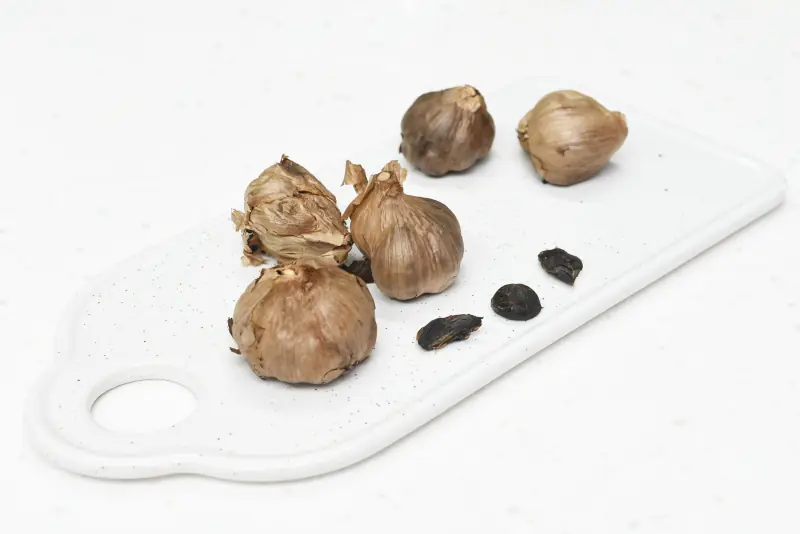
The general process involves selecting suitable garlic, maintaining controlled processing conditions, monitoring the equipment, and handling the finished product appropriately.
Because black garlic remains in warm conditions for an extended period, this is not a suitable process for an improvised setup with no reliable temperature control.
1. Inspect and Prepare the Garlic
Choose firm, fresh bulbs without mold or damage. Whole bulbs are commonly processed with their papery skins intact.
Do not use garlic that smells rotten, feels unusually soft, or shows visible spoilage. Starting with good-quality ingredients is important, although fresh garlic alone does not make an uncontrolled process safe.
2. Use Equipment That Can Maintain Controlled Conditions
Black garlic production requires more than a heating element. The equipment must maintain consistent processing conditions over a long period.
Temperature should be monitored rather than assumed from the appliance’s dial or advertised setting. Humidity also affects the final texture and moisture content.
Do not rely on a household appliance simply because it can remain switched on for several days.
3. Monitor the Process
During controlled production, temperature and humidity are monitored to ensure that the conditions remain within the intended range.
Do not open the equipment repeatedly in an attempt to judge progress by color or smell. Changes in the cloves can provide information about quality, but they cannot replace process monitoring or food-safety controls.
4. Assess the Finished Product
Black garlic usually develops dark cloves with a soft, chewy texture and a sweet, slightly tangy flavor.
The exact texture varies. Some products are moist and jelly-like, while others are firmer or drier. These differences do not, on their own, prove that a batch is safe.
A safe process must account for both the processing conditions and the properties of the finished product. For commercial production, measurements such as pH and water activity help determine suitable storage conditions.
5. Store It According to Verified Guidance
Do not automatically assume that homemade black garlic can be stored at room temperature.
The correct storage conditions depend on the finished product’s pH, water activity, and how it was processed. Without those measurements and a validated process, appearance and taste are not enough to establish shelf stability.
For a homemade batch made without validated safety controls, the safest choice is not to rely on it as a shelf-stable food. Refrigeration does not correct an unsafe production process.
Can You Make Black Garlic in a Rice Cooker?
Searches for “how to make black garlic in a rice cooker” are common because rice cookers can provide prolonged heat. Many online recipes describe wrapping garlic bulbs and leaving them in a cooker for an extended period.
However, a standard rice cooker is not a reliable choice for making black garlic safely. It may not maintain the required temperature consistently, and its temperature controls are not designed to verify food-processing conditions over several weeks.
NCCEH specifically advises against producing black garlic in household rice cookers and slow cookers because their temperature control may be inadequate. Long operating periods can also introduce additional hazards.
For that reason, I would not recommend a step-by-step rice cooker recipe as a dependable home method. If you want to make black garlic yourself, use equipment designed for controlled processing and follow a validated procedure.
Can You Make Black Garlic in an Oven?
You may also see recipes for making black garlic in an oven. An oven can provide heat, but that does not automatically make it suitable for black garlic production.
The process generally requires high humidity as well as stable temperature. A conventional oven may not maintain the necessary humidity, and its displayed temperature may not accurately represent the conditions around the garlic throughout a long processing period.
There are also practical concerns with leaving an oven operating for days or weeks, particularly if it is not designed for that use.
An oven should therefore not be treated as a guaranteed substitute for dedicated black garlic processing equipment. If a method cannot reliably control and monitor the necessary conditions, it is better not to use it.
How to Make Black Garlic Without Electricity
If you search for “how to make black garlic without electricity,” you may find suggestions involving insulated boxes, stored heat, or other improvised methods.
The problem is that black garlic needs sustained, controlled conditions for several weeks. An improvised heat source may cool down, fluctuate, or create uneven temperatures. You may not be able to tell whether the garlic has remained within the intended range.
For food safety, a method that cannot reliably maintain and monitor the process is not a dependable alternative.
If electricity is unavailable or you do not have suitable equipment, buying black garlic from a reputable producer is a more practical option than attempting an uncontrolled process.
How to Tell When Black Garlic Is Ready
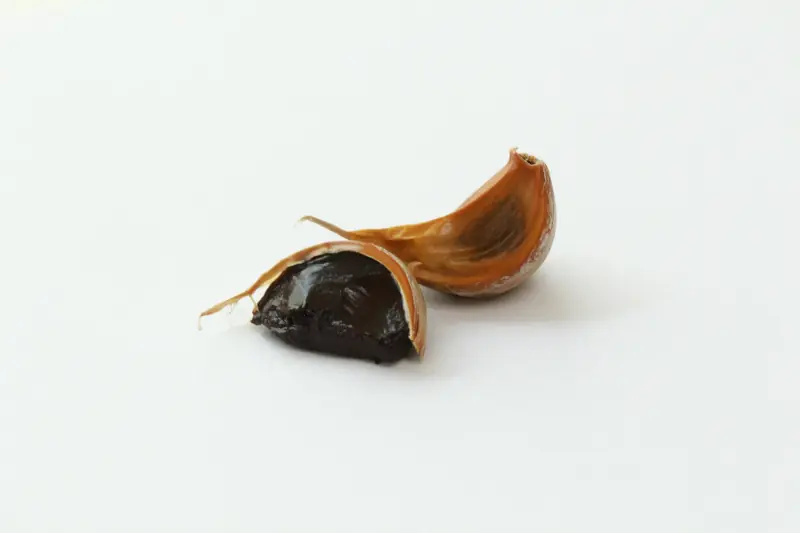
Properly produced black garlic typically has several recognizable characteristics:
- Color: The cloves are dark brown to black throughout.
- Texture: They are soft and chewy, sometimes almost jelly-like.
- Flavor: The taste is sweet, tangy, and savory, with much less of the sharp bite of raw garlic.
- Aroma: The strong, pungent smell of fresh garlic is reduced.
These characteristics can help you recognize black garlic as a food, but they are not a food-safety test.
A dark color does not prove that the garlic has been processed correctly. Likewise, an unusual smell, visible mold, or signs of spoilage are reasons not to eat it. Never taste a questionable batch to decide whether it is safe.
Black Garlic Vs Regular Garlic
Regular garlic has a sharper taste and contains compounds that form when the cloves are chopped or crushed, including allicin. Black garlic has a different profile of sulfur-containing compounds and often contains higher levels of certain antioxidants, depending on how it is produced. You can learn more in our article: Black Garlic Versus Regular Garlic, Taste, Nutrition and Health Benefits
Common Black Garlic Making Mistakes
Using an Unreliable Appliance
One of the most common problems is assuming that a rice cooker or slow cooker can maintain suitable conditions simply because it stays warm. Stable, monitored processing conditions are essential.
Ignoring Humidity
Temperature is only part of the process. Humidity affects how much moisture the garlic loses and influences its final texture.
Assuming Longer Is Always Better
Black garlic takes time, but extending the process indefinitely does not guarantee better quality. Temperature, humidity, garlic size, and the desired final texture all influence the result.
Judging Safety by Color Alone
Black cloves are characteristic of black garlic, but color does not confirm safe processing or storage. A reliable method requires more than visual inspection.
Storing It at Room Temperature Without Verification
The finished product’s pH and water activity influence whether it can be stored at room temperature. Without suitable measurements and validated guidance, shelf stability should not be assumed.
How to Store Homemade Black Garlic
Storage is an important part of making black garlic, not an afterthought.
Commercial products may be sold with specific storage instructions based on their processing and testing. Follow the manufacturer’s directions.
For homemade black garlic, storage requirements cannot be determined from color or texture alone. The pH and water activity of the finished product influence whether refrigeration is necessary or whether room-temperature storage is appropriate.
If you have not used a validated process and cannot verify the finished product’s properties, do not treat it as shelf-stable. Refrigeration is not a substitute for safe processing, and any batch with signs of spoilage should be discarded.
Readers Also Enjoyed
Frequently Asked Questions
How long does it take to make black garlic at home?
Black garlic usually takes several weeks to produce. The exact time depends on temperature, humidity, garlic size, equipment, and the desired texture. Published processing times should not be treated as interchangeable recipes because the conditions can differ.
What is the best temperature for making black garlic?
Published methods commonly use temperatures between 60°C and 90°C (140°F and 194°F), with high relative humidity. The best conditions depend on the specific process and equipment. A temperature range alone is not a complete recipe or a guarantee of safety.
Can you make black garlic in a slow cooker?
A slow cooker is not recommended as a dependable method. Its temperature control may be inadequate for a process that requires consistent conditions over several weeks.
Is black garlic really fermented?
The term “fermented garlic” is widely used, including in scientific literature. However, black garlic production does not necessarily depend on active microbial fermentation. Heat-driven chemical reactions and changes in the garlic’s natural compounds play major roles in its transformation.
Why is my black garlic hard instead of soft?
Black garlic can become too dry if it loses too much moisture during processing. Temperature, humidity, processing time, and garlic size can all affect the final texture. A hard texture alone does not tell you whether a batch is safe to eat.
Can homemade black garlic be stored at room temperature?
Not automatically. Room-temperature storage depends on properties such as pH and water activity, as well as the processing method. Without a validated process and suitable measurements, do not assume that homemade black garlic is shelf-stable.
Is homemade black garlic safe?
It can be produced safely under appropriately controlled and monitored conditions, but an improvised process may introduce food-safety risks. If you cannot verify the processing conditions and storage requirements, commercially produced black garlic is the safer choice.
Sources
- Chen, T. (2023). Black Garlic: Food Safety Considerations During Production and Storage. National Collaborating Centre for Environmental Health (NCCEH).
https://ncceh.ca/resources/evidence-reviews/black-garlic-food-safety-considerations-during-production-and-storage - Kimura, S., Tung, Y.-C., Pan, M.-H., Su, N.-W., Lai, Y.-J., & Cheng, K.-C. (2017). Black garlic: A critical review of its production, bioactivity, and application. Journal of Food and Drug Analysis, 25(1), 62–70.
https://pmc.ncbi.nlm.nih.gov/articles/PMC9333422/