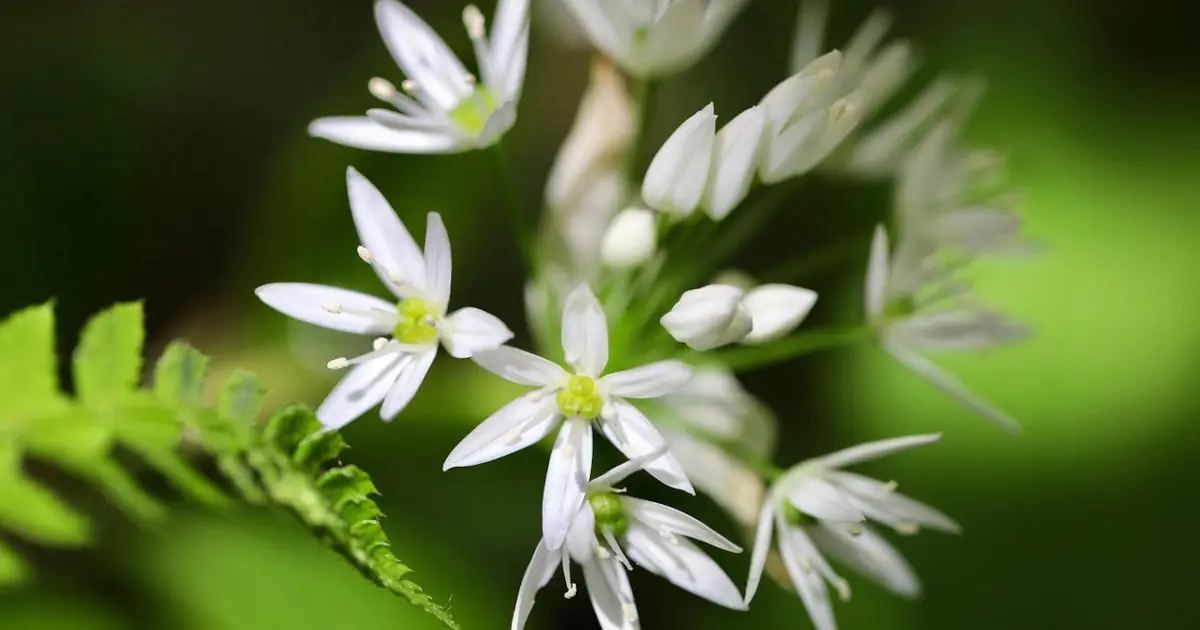
Wild garlic and wild onion look very similar, but the easiest way to tell them apart is to check the leaves: wild garlic (Allium vineale) has round, hollow leaves, while wild onion (Allium canadense) has flat, solid leaves. Both are perennial Allium plants with a strong onion or garlic smell when crushed, and both can appear in lawns, fields and other grassy areas.
There is one important complication: “wild garlic” is a common name, not a single botanical name. In North American weed and extension references, Allium vineale is commonly called wild garlic, while Allium canadense is called wild onion. In Europe, however, “wild garlic” often refers to Allium ursinum, also known as ramsons or bear’s garlic.
So if you are trying to identify a plant, the scientific name matters. In this article, the main comparison is wild garlic (Allium vineale) vs. wild onion (Allium canadense), the two species commonly compared in U.S. extension resources.
This article is included in our complete guide to garlic. See our main article: Garlic: Nutrition, Health Benefits and Bioactive Compounds.
Wild Garlic vs Wild Onion: What’s the Difference?
Wild garlic and wild onion are closely related plants in the genus Allium, and at first glance they can be surprisingly difficult to distinguish. Both have narrow, grass-like foliage, grow from bulbs and produce a noticeable onion or garlic odor when their leaves are crushed.
The leaves provide the quickest useful clue.
| Feature | Wild Garlic | Wild Onion |
|---|---|---|
| Scientific name | Allium vineale | Allium canadense |
| Leaf shape | Round and hollow | Flat and solid |
| Leaves | Tubular, grass-like | Flat, blade-like |
| Smell when crushed | Strong garlic/onion odor | Strong onion-like odor |
| Flower color | White, pink, purple or greenish depending on stage | Usually white or pink |
| Reproductive structures | Flowers and aerial bulbils may occur | Flowers and underground bulbils; aerial structures can also occur |
| Bulb covering | Thin, papery or membranous | Net-veined covering |
| Life cycle | Perennial | Perennial |
| Common habitat | Lawns, fields, disturbed areas | Lawns, meadows, fields and other disturbed areas |
These characteristics come from university extension identification guides, which specifically compare A. vineale and A. canadense.
If you only remember one difference, remember this:
Wild garlic has hollow, round leaves. Wild onion has flat, non-hollow leaves.
That distinction is particularly useful when the plants have not yet flowered.
How to Identify Wild Garlic
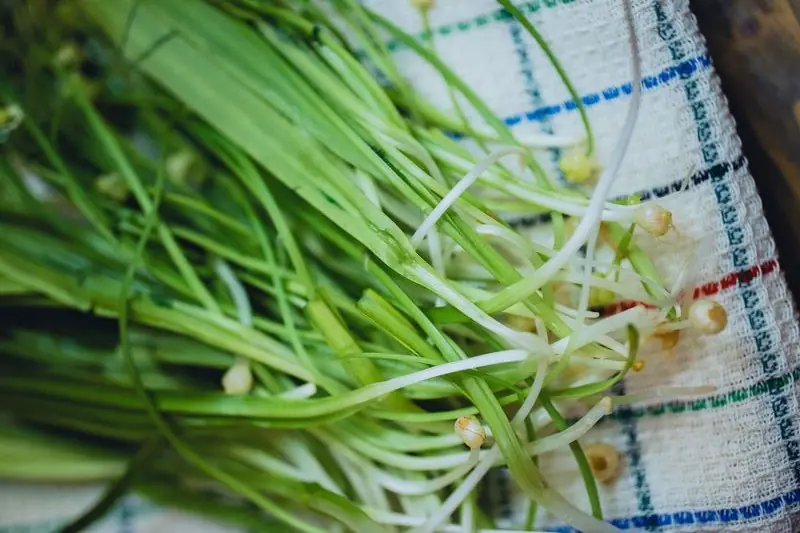
Wild garlic (Allium vineale) is a perennial bulb-forming plant with narrow, hollow, grass-like leaves. The leaves are usually upright when the plant is young and can look surprisingly similar to grass or chives.
One of the easiest ways to recognize it is by the combination of leaf shape and smell. The leaves are round or tubular rather than flat, and crushing them releases a strong garlic or onion-like odor. Cornell University’s weed identification information describes the leaves as slender, hollow, upright and round in cross-section.
Wild garlic can also produce a flowering stalk with small flowers and, importantly, aerial bulbils. These small bulb-like structures can replace or occur alongside flowers and are an especially useful identification feature.
What does wild garlic look like?
Wild garlic usually has:
- long, narrow green leaves
- leaves that are hollow and round in cross-section
- a grass- or chive-like appearance
- a strong garlic or onion odor when crushed
- a bulb underground
- a tall flowering stalk when mature
- small flowers, bulbils, or a mixture of both.
It commonly appears in lawns, fields, meadows and disturbed areas. Because the leaves are narrow and grass-like, a patch can be easy to overlook until the plants are cut or crushed and their strong odor becomes noticeable.
Wild Garlic vs Wild Onion Leaves
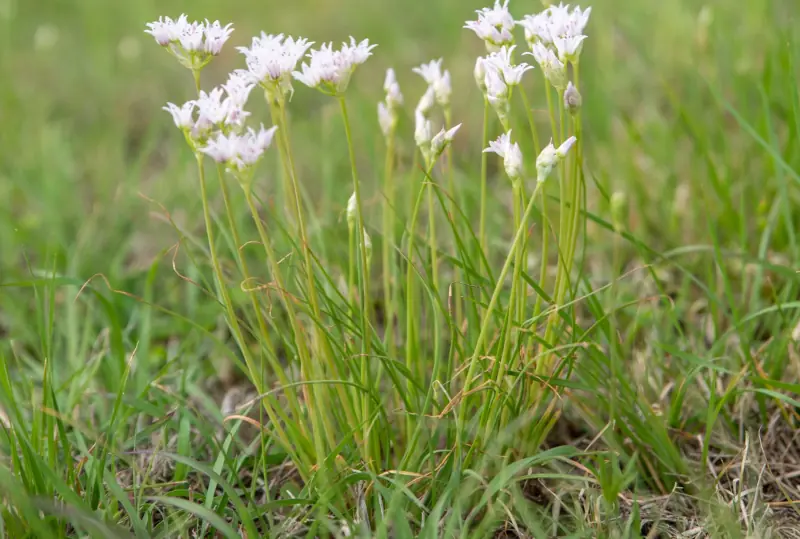
The leaves are probably the best place to start when comparing wild garlic vs wild onion.
Wild garlic leaves
Wild garlic leaves are:
- round in cross-section
- hollow inside
- narrow and tubular
- smooth
- often somewhat curled
- similar in appearance to chives.
If you carefully examine a leaf, the hollow center is an important clue.
Wild onion leaves
Wild onion leaves are:
- flat rather than tubular
- solid rather than hollow
- narrow and grass-like
- usually produced from the base of the plant.
Penn State Extension describes wild garlic leaves as smooth, round and hollow, while wild onion leaves are flat and not hollow. Michigan State University’s comparison guide gives the same distinction.
A simple leaf test
If you already know that you are looking at one of these two Allium plants, look at a leaf rather than relying only on its smell.
Round and hollow = wild garlic (Allium vineale)
Flat and solid = wild onion (Allium canadense)
The difference can be difficult to see from a distance, so a close-up photograph or examination of the leaf cross-section can be much more useful than looking at the whole plant.
Wild Garlic vs Wild Onion Flowers
Flowers can also help with wild garlic vs wild onion identification, particularly later in the growing season.
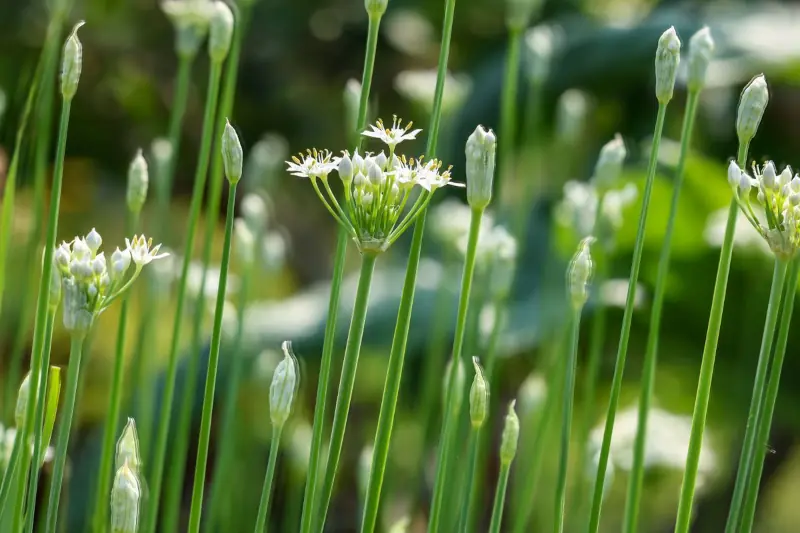
Wild garlic can produce small flowers that may be white, pinkish, purple or greenish, but its flowering structures can also contain aerial bulbils. In fact, some plants produce many bulbils and relatively few flowers.
Wild onion generally produces an umbel of small flowers, commonly white to pink, on a solid flowering stalk. The flowers are typically more obvious than the bulbils seen on many wild garlic plants.
Wild garlic flowers
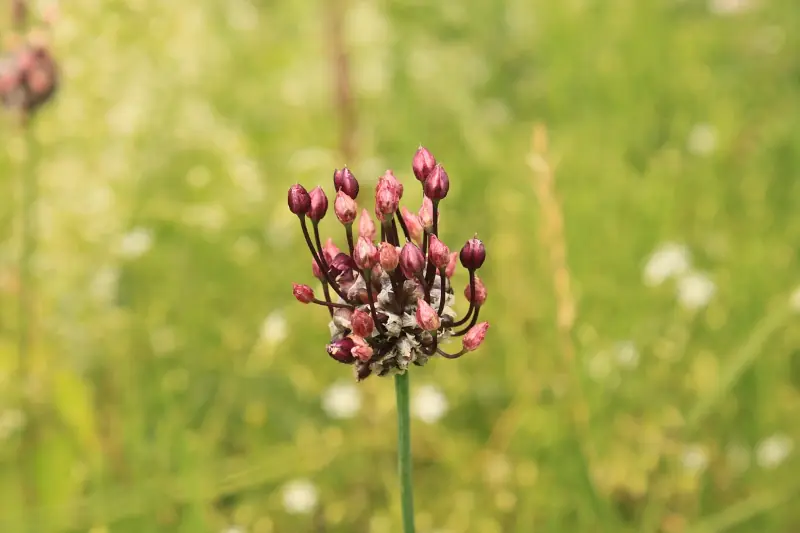
Look for:
- a flowering stalk rising above the foliage
- small flowers that may be white, pink or purple
- aerial bulbils, sometimes replacing many of the flowers
- a generally garlic-like odor from the plant.
Wild onion flowers
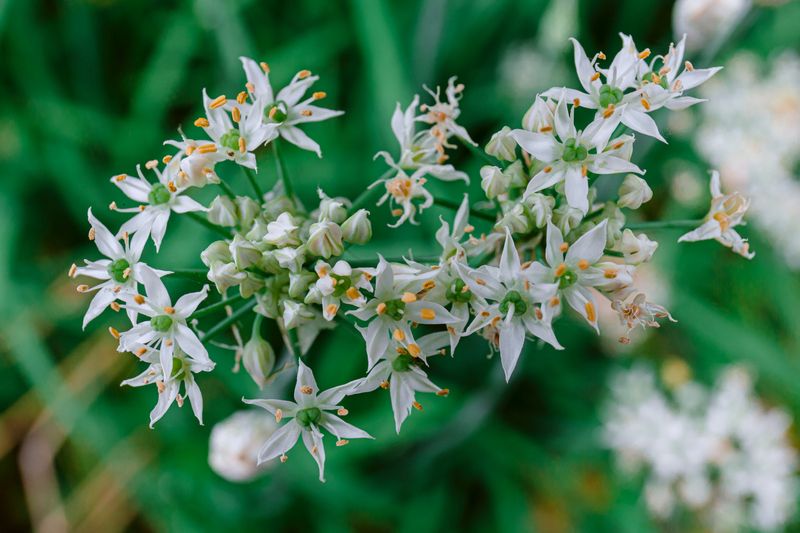
Look for:
- rounded clusters of small flowers
- white or pink flowers
- a solid flowering stalk
- flat leaves at the base.
Flower appearance can vary with the plant’s growth stage, so do not use flower color alone to identify the species. Leaves, the flowering structure and the scientific name are more reliable when used together.
Wild Garlic vs Wild Onion: Smell and Taste
Both wild garlic and wild onion have a strong smell when their leaves are crushed. This is one reason the plants can be confusing in the first place. Penn State Extension notes that the foliage of both plants releases a strong odor when crushed.
The names give a general idea of the difference: wild garlic tends to have a more garlic-like aroma, while wild onion has a more onion-like smell.
But smell should not be your only identification method.
If you are unsure what plant you have found, do not assume that a garlic-like smell automatically means that it is a particular edible Allium. Common names are inconsistent, and other plants can be confused with edible species.
Taste is even less useful as an identification method. You should identify a wild plant before tasting it, rather than tasting a plant to determine what it is.
Wild Garlic vs Wild Onion: Are They Edible?
This is one of the most important questions behind searches for wild garlic vs wild onion edible.
Some Allium species are used as food, and North Carolina Extension describes Allium canadense as an edible plant whose leaves, flowers, stems and bulbs can be used as food. At the same time, the same source notes low-level poisonous characteristics and stresses that toxicity can depend on factors such as the plant part, amount consumed, age and individual sensitivity.
North Carolina Extension also describes Allium vineale as having edible uses but lists low-severity poisonous characteristics and advises harvesting only plants with the characteristic onion odor.
That makes one point especially important:
Do not eat a wild plant simply because someone called it “wild garlic” or “wild onion.”
Common names can refer to different plants in different regions. Before eating a foraged plant, you should be confident about its scientific identity, not just its common name.
There is another practical issue. Plants growing in lawns, roadsides or landscaped areas may have been exposed to herbicides or other chemicals. North Carolina Extension specifically advises against harvesting Allium canadense from areas where herbicides have been used.
Is the smell enough to confirm that wild garlic is edible?
No.
The garlic or onion smell is a useful characteristic when identifying Allium plants, but it is not a complete safety test. Correct identification should consider the leaves, flowers, bulbs, growth habit and location, preferably with a reliable regional field guide or expert identification.
Wild Garlic vs Onion Grass: Are They the Same?
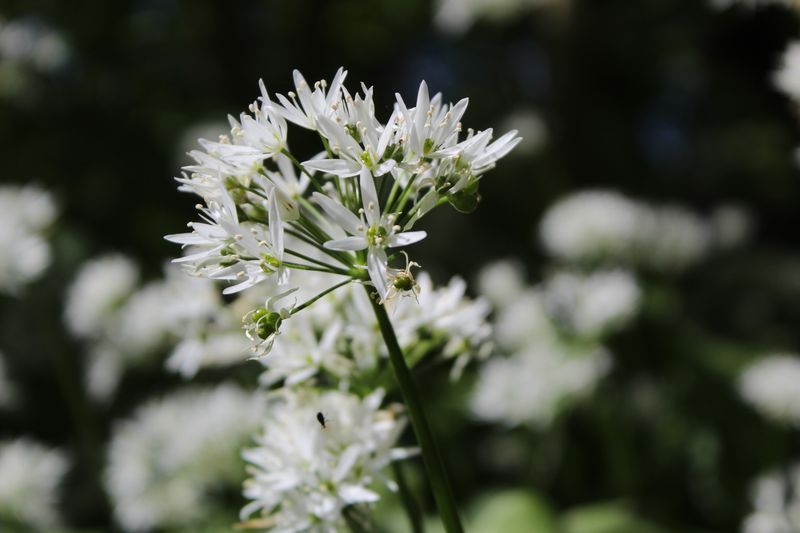
“Onion grass” is another common name that can refer to wild garlic (Allium vineale).
North Carolina Extension lists onion grass among the common names for Allium vineale, along with field garlic, crow garlic and wild garlic.
This explains why searches for wild garlic vs onion grass can be confusing. In many cases, the names are not describing two completely different plants.
The same problem occurs with other common names such as:
- field garlic
- crow garlic
- wild onion
- onion grass
- stag’s garlic.
Cornell also lists several of these common names for Allium vineale.
For identification, the scientific name Allium vineale is much more useful than relying on one of these common names.
Is Wild Garlic the Same as Regular Garlic?
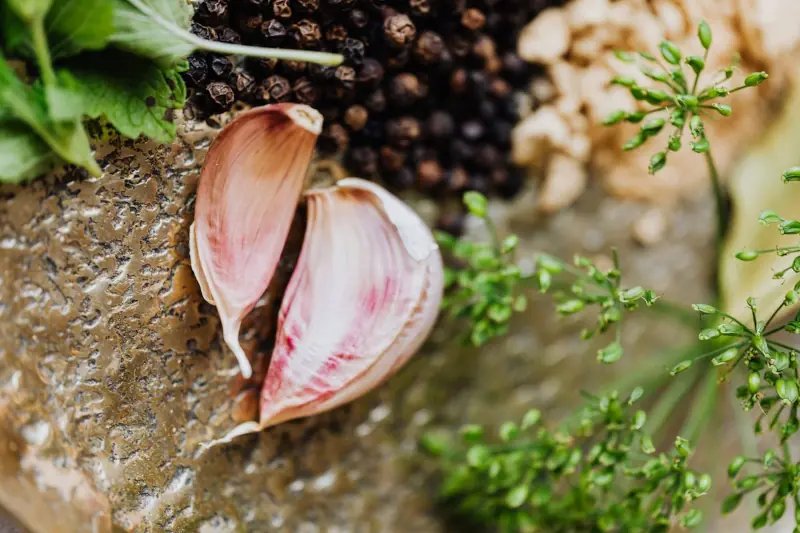
No. Wild garlic and regular garlic are related, but they are not the same species.
The garlic commonly grown and sold as a food crop is Allium sativum. The plant commonly called wild garlic in the U.S. comparison discussed here is Allium vineale.
All three plants belong to the genus Allium, which is why they can share characteristics such as bulb formation and a strong sulfur-containing onion or garlic aroma. But they are different species with different appearances and typical uses.
This distinction is also why the phrase “wild garlic” can be confusing.
In the United Kingdom and parts of Europe, for example, wild garlic commonly refers to Allium ursinum, also called ramsons, bear’s garlic or wood garlic. The Royal Horticultural Society describes A. ursinum as a garlic-scented perennial with broad, elliptic leaves and white star-shaped flowers.
So:
- Regular garlic: Allium sativum
- Wild garlic in many U.S. weed references: Allium vineale
- Wild onion in U.S. extension comparisons: Allium canadense
- Wild garlic/ramsons in much of Europe: Allium ursinum
This is one reason scientific names are so useful when searching for information about wild plants.
How to Use Wild Garlic
If you have correctly identified a species that is suitable for culinary use, wild Allium plants can be used in ways similar to other onion-family ingredients.
Depending on the species, culinary uses can include:
- chopped leaves
- seasoning
- salads
- soups
- sauces
- cooked dishes
- using the plant as an onion or garlic-flavored ingredient.
For Allium canadense, North Carolina Extension specifically describes the leaves, flowers, stems and bulbs as edible and notes uses similar to domestic onions.
However, wild garlic is not a direct one-to-one replacement for a garlic clove. The flavor, texture and intensity can be quite different, and the result will depend on the species and the part of the plant being used.
If you are using a plant gathered from the wild, correct identification should come before culinary experimentation.
Can Wild Garlic Be Used as a Garlic Substitute?
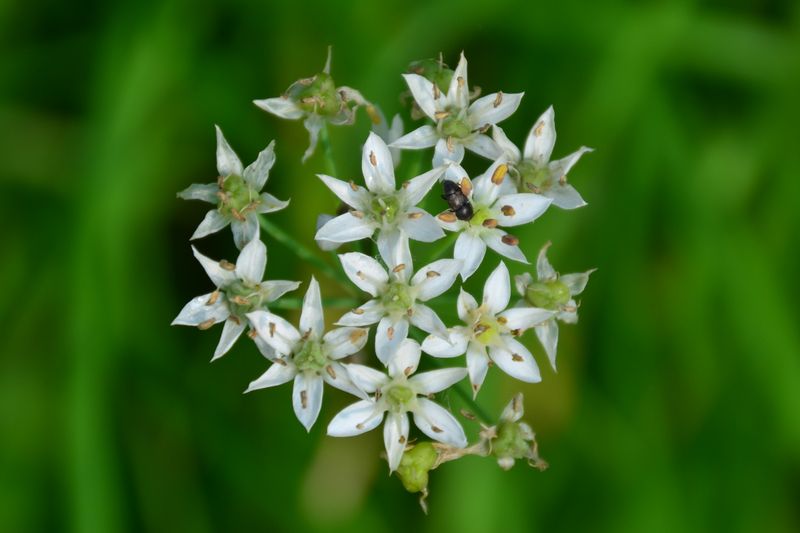
Yes, properly identified edible wild garlic can sometimes be used as a garlic substitute, especially when the goal is to add a fresh garlic- or onion-like flavor.
The important limitation is that wild garlic does not necessarily behave like a conventional garlic clove.
Fresh leaves contain much more moisture and have a different texture, while the flavor can be greener and more onion-like. The intensity also depends on the species and the age of the plant.
For example, Allium vineale has hollow leaves similar in shape to chives, making its foliage quite different from the cloves of cultivated garlic.
So if a recipe calls for a garlic clove, wild garlic leaves are better thought of as a fresh aromatic substitute rather than a direct 1:1 equivalent.
Garlic: Comparison Articles and Interesting Pairings
- Comparison of the Nutritional Value of Garlic and Onion
- Differences between Raw and Cooked Garlic.
- Garlic vs Garlic Chives Whats The Difference
- Garlic Powder vs Fresh Garlic Nutritional Differences
Wild Garlic vs Wild Onion: Key Differences at a Glance
If you are trying to identify the two plants quickly, focus on these differences:
1. Look at the leaves.
Wild garlic has round, hollow leaves. Wild onion has flat, solid leaves.
2. Look at the flowering structure.
Wild garlic can produce flowers as well as aerial bulbils, while wild onion is primarily recognized by its flower clusters and solid flowering stalk.
3. Don’t rely only on common names.
“Wild garlic,” “wild onion,” “field garlic” and “onion grass” can refer to different plants depending on the region.
4. Don’t use taste as an identification test.
Identify the plant first, especially before eating anything collected from the wild.
5. Check the scientific name.
For the U.S. comparison in this article, the two species are Allium vineale and Allium canadense.
Readers Also Enjoyed
Frequently Asked Questions
What does wild garlic look like?
Wild garlic (Allium vineale) has long, narrow, grass-like leaves that are round and hollow. The plant grows from a bulb and may produce a flowering stalk with small flowers and aerial bulbils. Its leaves give off a strong garlic or onion odor when crushed.
How can you tell wild garlic from wild onion?
The simplest distinction is the leaves. Wild garlic has hollow, round leaves, while wild onion has flat, solid leaves. Both plants have a strong odor when crushed, so leaf structure is more useful than smell alone.
Are wild garlic and wild onion the same plant?
No. In the U.S. comparison commonly used by extension services, wild garlic is Allium vineale and wild onion is Allium canadense. They are closely related Allium species but have different leaf and reproductive characteristics.
Is wild garlic the same as regular garlic?
No. Regular cultivated garlic is Allium sativum, while the plant commonly called wild garlic in many U.S. sources is Allium vineale. Both belong to the genus Allium, but they are different species.
Does wild garlic taste like garlic?
Wild garlic generally has a strong garlic- or onion-like flavor and aroma, but the exact taste depends on the species and plant part. The foliage of Allium vineale has a pungent garlic-like smell when crushed.
What do wild garlic leaves look like?
Wild garlic leaves are narrow, green, smooth and hollow with a round cross-section. They can resemble grass or chives, particularly when the plants are young.
What is onion grass?
Onion grass is a common name used for Allium vineale, the plant also known as field garlic, crow garlic and wild garlic. Because common names vary by region, the scientific name is the safest way to determine which plant is being discussed.
Can wild garlic be used instead of garlic?
An edible, correctly identified wild Allium can be used as a garlic-flavored ingredient, but it is not necessarily a direct substitute for a garlic clove. Leaves are wetter and have a different texture and flavor intensity than cultivated garlic cloves.
Are wild garlic and wild onion related?
Yes. Both are members of the genus Allium, which also includes cultivated garlic and onions. However, wild garlic (Allium vineale) and wild onion (Allium canadense) are different species.
Summary
The easiest way to distinguish wild garlic from wild onion is to examine the leaves: wild garlic has hollow, round leaves, while wild onion has flat, solid leaves. Flowers, bulbils, growth habit and smell can provide additional clues, but common names can be misleading.
If you are researching a plant called “wild garlic,” always check the scientific name and the region where the plant grows. In U.S. sources, Allium vineale is commonly called wild garlic, while Allium canadense is commonly called wild onion; in Europe, “wild garlic” may instead refer to Allium ursinum.
That small distinction can prevent a lot of confusion when comparing wild garlic, wild onion, onion grass, field garlic and regular garlic.
Sources
- Penn State Extension — wild onion (Allium canadense) vs. wild garlic (Allium vineale).
- Michigan State University Extension — identification guide comparing wild garlic and wild onion.
- Cornell University — identification information for Allium vineale.
- North Carolina Extension Gardener Plant Toolbox — Allium canadense.
- North Carolina Extension Gardener Plant Toolbox — Allium vineale.
- Royal Horticultural Society — Allium ursinum (ramsons/wild garlic).