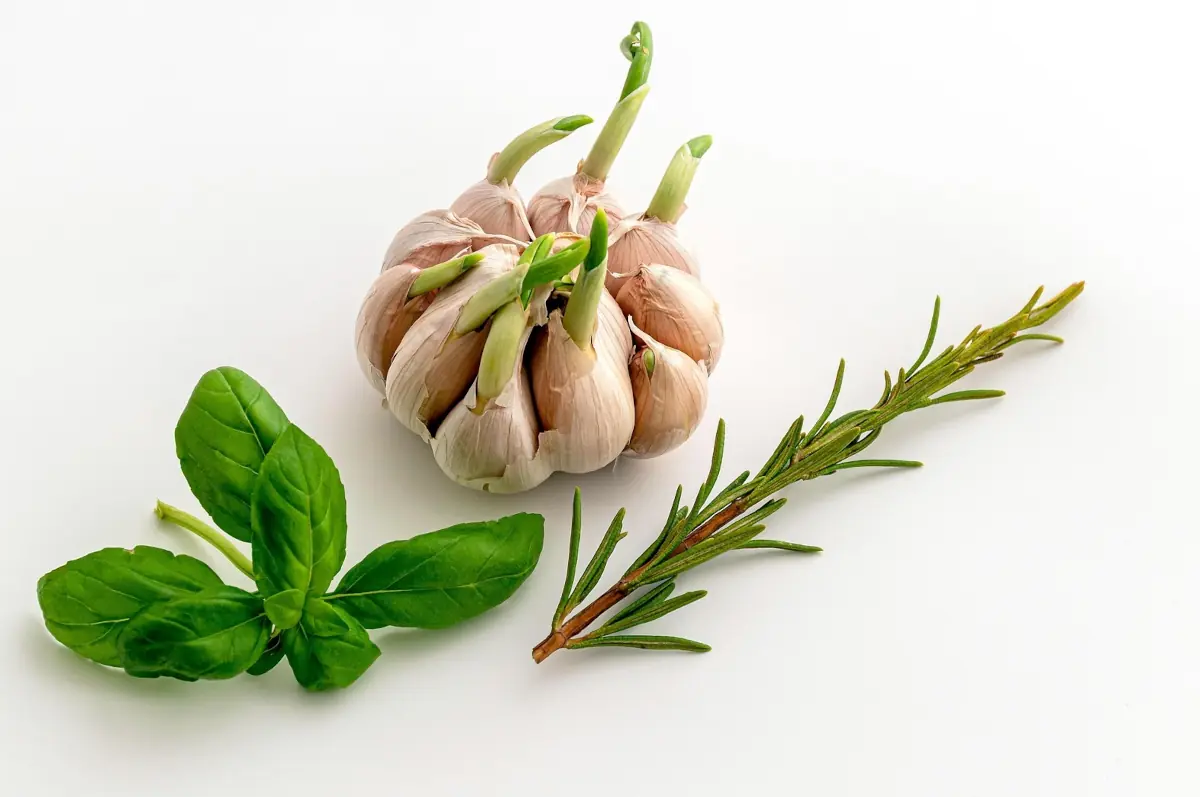
Yes, you can eat sprouted garlic. A green shoot growing from the center of a garlic clove is usually a sign that the garlic has started to grow again, not that it has gone bad. If the clove is still firm and shows no signs of mold or decay, it is generally safe to eat.
The main difference is flavor. Sprouted garlic can taste sharper or more bitter, especially when the green shoot has grown longer. You can eat it raw or cooked, and removing the shoot is optional if you don’t mind the taste.
However, sprouted garlic is not the same as moldy or rotting garlic. Knowing how to tell the difference will help you decide when to use a clove and when to throw it away.
If you want to learn more about garlic, its nutrients, sulfur compounds, and the differences between fresh, cooked, and processed garlic, see our complete guide to Garlic: Nutrition, Health Benefits and Bioactive Compounds.
Can You Eat Sprouted Garlic?
Yes, you can eat sprouted garlic cloves in most cases. Sprouting is a natural part of the garlic bulb’s growth cycle. Under the right conditions, the dormant clove begins developing a shoot that eventually grows into a green stem.
This process often happens when garlic has been stored for a while or exposed to conditions that encourage growth, including warmth, light, and moisture.
A small green shoot does not automatically mean the garlic is spoiled. If the clove remains firm, smells normal, and has no visible mold or signs of decay, you can generally use it in your cooking.
There is usually no need to throw away an entire bulb just because one or two cloves have started sprouting. Inspect the cloves individually and discard any that show signs of spoilage.
If you prefer a milder garlic flavor, cut the clove in half lengthwise and remove the green shoot before using it.
Is Sprouted Garlic Safe to Eat?
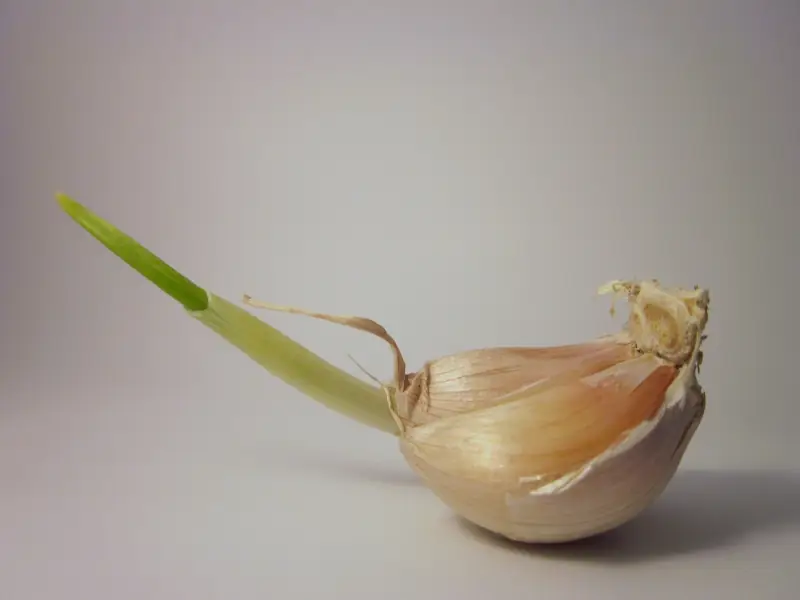
Sprouted garlic is generally safe to eat as long as the clove itself is still in good condition.
The green shoot is a developing plant part, not a sign of contamination by itself. Garlic naturally produces these shoots as it prepares to grow.
Before using sprouted garlic, check the following:
- Firm texture: The clove should feel reasonably firm rather than soft, mushy, or spongy.
- Normal smell: Fresh garlic has a characteristic pungent aroma. A rotten or otherwise unusual smell is a reason to discard it.
- No visible mold: Look for fuzzy patches, unusual surface growth, or suspicious discoloration.
- No signs of decay: Cloves that are wet, decomposing, or badly deteriorated should not be used.
A green shoot alone is not a reason to worry. Mold, decay, and deterioration are different issues. When garlic is visibly moldy, the safer choice is to discard the affected clove rather than cut away the suspicious part and use the rest.
The USDA explains that mold can extend below the visible surface of food, and some molds can produce harmful substances. USDA Food Safety and Inspection Service.
Is Sprouted Garlic Bad for You?
No, sprouted garlic is not inherently bad for you. If it is still fresh enough to eat, sprouting alone does not make it harmful.
You can use it as you would ordinary garlic, keeping in mind that its flavor and texture may have changed.
Some research has also examined changes in garlic’s antioxidant activity during sprouting. A 2014 study found that garlic sprouting was associated with changes in its chemical composition and antioxidant activity in laboratory tests. However, this does not establish that eating sprouted garlic provides greater health benefits in humans.
In other words, you do not need to avoid sprouted garlic, but there is also no reason to assume that it is automatically healthier than fresh, unsprouted garlic.
Why Is Garlic Green Inside?
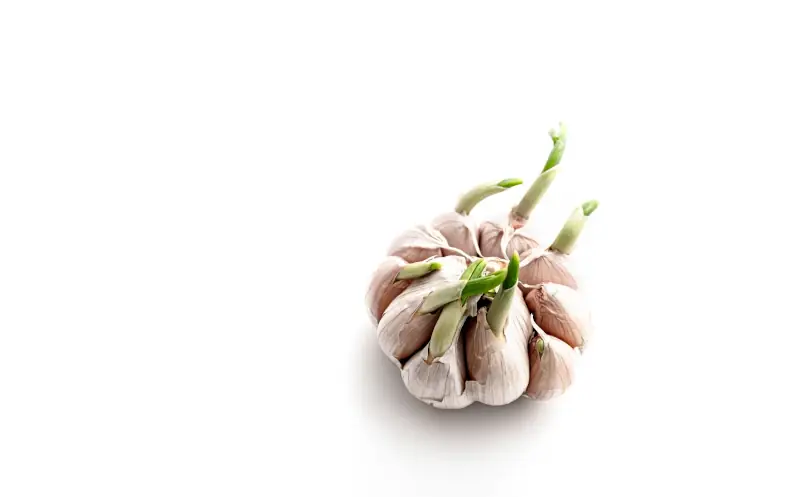
If you cut a garlic clove in half and notice a green line or small green shoot in the center, you are usually seeing the developing sprout.
The shoot grows from the center of the clove as the garlic begins a new growth cycle. It may initially appear as a thin green or pale yellow line. As it develops, it becomes longer and more noticeable.
This is normal and does not automatically mean that the garlic is spoiled.
Is Green Inside Garlic Safe to Eat?
Yes, a green center inside a garlic clove is generally safe to eat if the clove is otherwise fresh and firm.
The green color itself is not a reliable sign of spoilage. What matters is the condition of the entire clove.
For example:
- A firm clove with a small green shoot is usually fine to use.
- A firm clove with a longer green shoot may have a stronger or more bitter taste.
- A soft clove with mold, decay, or an unpleasant smell should be discarded.
It is also worth distinguishing a green shoot from unusual greenish or bluish fuzzy patches on the surface of garlic. Those patches may indicate mold rather than normal sprouting.
If you are unsure whether the discoloration is a natural shoot or mold, do not eat the questionable clove.
Should You Remove the Green Shoot From Garlic?
You do not have to remove the green shoot to make otherwise sound, sprouted garlic safe to eat.
However, removing it can improve the flavor, particularly when you are using garlic raw.
To remove the shoot, peel the clove and cut it lengthwise. You should see the green center running through the middle. Lift it out with the tip of your knife, then chop or crush the remaining garlic as usual.
This step is optional. If the garlic tastes fine to you, there is no need to remove the shoot.
Can You Eat Sprouted Garlic Raw?
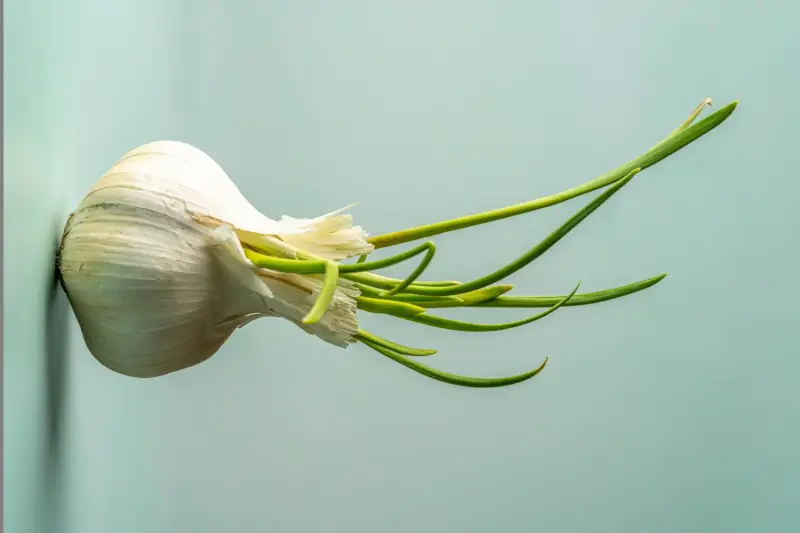
Yes, you can eat sprouted garlic raw if the clove is fresh and shows no signs of spoilage.
You can chop or crush it into salad dressings, dips, sauces, marinades, and other recipes that call for raw garlic.
However, raw sprouted garlic can taste sharper or more bitter than you expect. The green shoot may be especially noticeable in dishes where garlic is the main flavor.
If you are preparing pesto, garlic dressing, or a simple garlic sauce, consider removing the shoot before crushing the clove. This may help produce a milder, more balanced flavor.
Keep in mind that raw garlic can irritate the digestive system in some people. If raw garlic causes heartburn, stomach discomfort, or irritation, cooking it may make it easier for you to tolerate. Sprouting does not eliminate these potential effects.
Can You Cook With Sprouted Garlic?
Yes, you can cook with sprouted garlic. It works in many of the same dishes as regular garlic, provided the cloves are still in good condition.
You can use it in:
- Soups and stews
- Pasta sauces
- Roasted vegetables
- Stir-fries
- Garlic butter
- Marinades and salad dressings
For most cooked dishes, a small green shoot is not a problem. If you are making a recipe where a clean, mild garlic flavor matters, remove the shoot first.
When sautéing garlic, pay attention to the heat. Garlic can burn quickly, and burnt garlic often tastes bitter. If your sprouted garlic already has a stronger flavor, cooking it gently may give you a better result.
Remember that cooking is not a way to rescue garlic that is moldy or rotten. Discard garlic that shows clear signs of spoilage rather than trying to make it safe through heating.
Does Sprouted Garlic Taste Different?
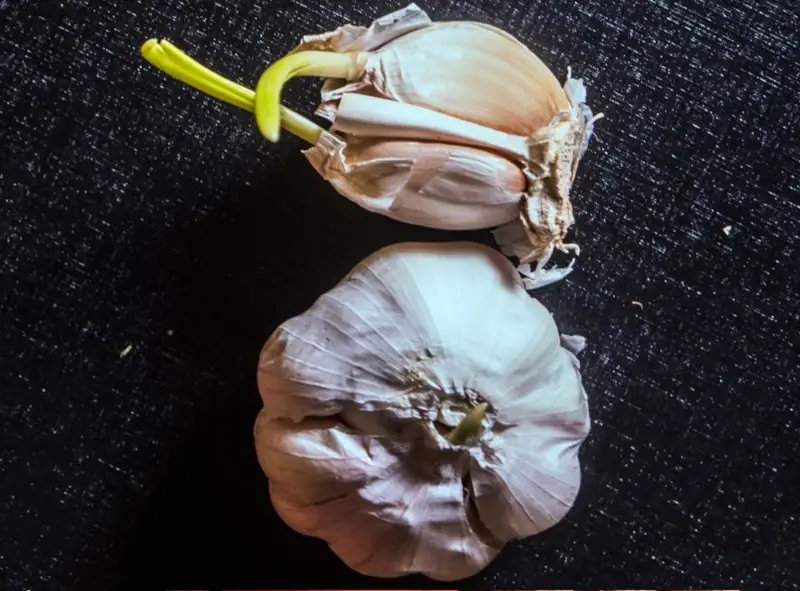
Yes, sprouted garlic can taste different from fresh, unsprouted garlic.
The difference is not always dramatic. Some cloves taste almost the same, while others have a sharper, more bitter flavor. The result depends on the clove, how far the shoot has developed, and how the garlic is prepared.
The green shoot is often associated with the most noticeable bitterness. This is why many cooks remove it when preparing raw garlic dishes.
The flavor difference matters most in recipes that rely on fresh garlic for a clean, pronounced taste. In soups, stews, sauces, and other strongly flavored dishes, the difference may be less noticeable.
If your sprouted garlic tastes normal, you can use it without making any special adjustments. If it tastes unpleasantly bitter, removing the shoot may help. If the clove itself tastes or smells rotten, discard it.
When Should You Throw Away Garlic?
Not all changes in garlic are harmless. Sprouting is generally normal, but visible deterioration is a different matter.
Discard garlic if you notice any of the following:
Mold or fuzzy growth. White, blue-green, or other unusual fuzzy patches can indicate mold. Do not assume that removing the visible patch makes the rest of a moldy clove safe.
Soft or mushy texture. Healthy garlic cloves are usually firm. A clove that has become very soft, spongy, or mushy may have deteriorated.
Rotten or unusual odor. Garlic naturally has a strong smell, but a distinctly rotten or unpleasant odor is a warning sign.
Wet, decaying tissue. Garlic that is breaking down, becoming slimy, or showing obvious decay should be discarded.
Severe deterioration. A clove that is badly shriveled, hollow, or otherwise significantly deteriorated is not a good choice for cooking.
A slightly dry clove is not necessarily spoiled, but its quality may have declined. Use your judgment and avoid eating garlic when there are clear signs of decay.
When inspecting a bulb, check the individual cloves rather than judging the whole bulb by the presence of a green shoot. One sprouted clove does not necessarily mean that every clove has gone bad.
Sprouted Garlic vs. Green Garlic: What’s the Difference?
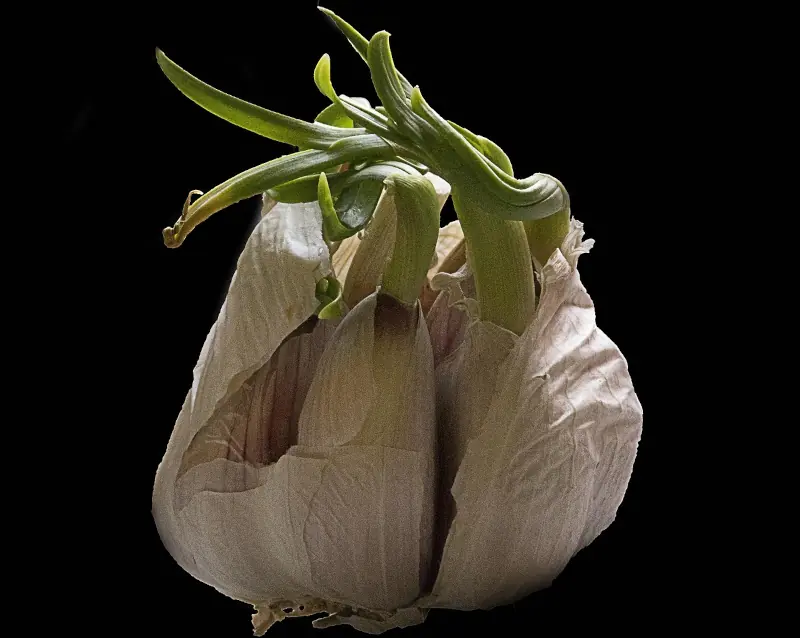
The terms sprouted garlic and green garlic can be confusing because they describe different things.
Sprouted garlic is a mature garlic bulb or clove that has started producing a shoot. The shoot develops inside the clove and may eventually emerge from the top.
Green garlic, on the other hand, usually refers to young garlic plants harvested before the bulbs have fully matured. They have green leaves and tender stems and are often used in cooking like scallions or spring onions.
| Feature | Sprouted garlic | Green garlic |
|---|---|---|
| What it is | Mature garlic beginning to grow | Young garlic harvested early |
| Appearance | Green shoot inside or emerging from a clove | Green leaves and a small, developing bulb |
| Common use | Used like ordinary garlic | Used for its tender leaves, stems, and young bulb |
| Flavor | Can be sharper or more bitter | Often milder and fresher |
| Should you eat it? | Generally yes, if the clove is sound | Generally yes, when fresh and properly handled |
Both can be useful ingredients, but they are not interchangeable in every recipe. Green garlic is often treated as a fresh vegetable, while sprouted garlic is usually used in the same way as mature garlic.
How to Store Garlic to Prevent Sprouting
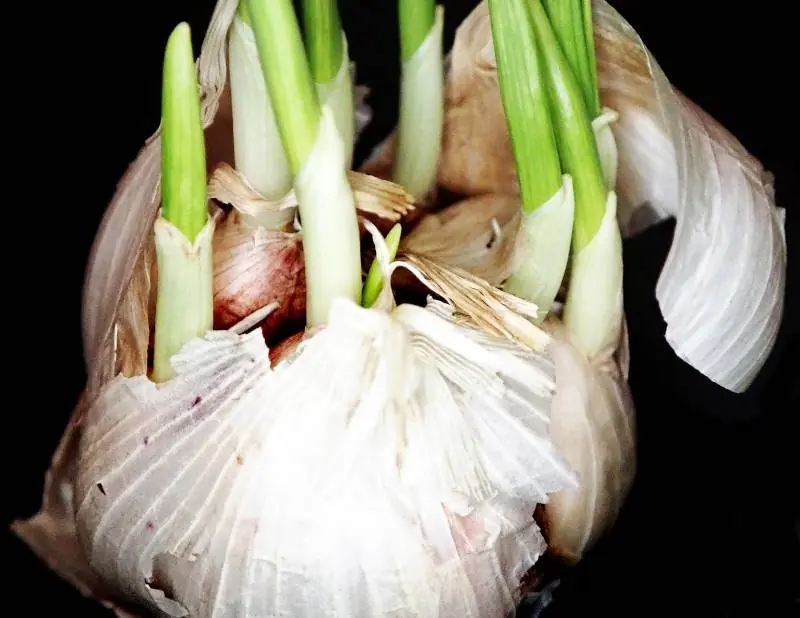
Garlic eventually sprouts as it ages, so you cannot prevent the process indefinitely. However, proper storage can help maintain its quality for longer.
Keep whole garlic bulbs in a cool, dry, well-ventilated place away from direct sunlight. A breathable container or mesh bag is generally preferable to a sealed container that traps moisture.
Avoid storing whole bulbs in damp conditions, as excess moisture can encourage mold and deterioration.
Check stored garlic regularly and remove cloves that show signs of spoilage. If a clove has already sprouted but remains firm and healthy, you can simply use it in your next meal.
If you have more garlic than you can use before its quality declines, consider planning meals around it rather than waiting for every clove to remain in perfect condition.
Readers Also Enjoyed
Frequently Asked Questions
Can you eat sprouted garlic cloves?
Yes. You can generally eat sprouted garlic cloves if they remain firm and show no signs of mold or decay. The green shoot may affect the flavor, but sprouting alone does not make the clove unsafe.
Is it safe to eat sprouted garlic raw?
Yes, if the garlic is still fresh and in good condition. Raw sprouted garlic may taste sharper or more bitter, so removing the green shoot can help if you prefer a milder flavor.
Is green inside garlic okay to eat?
Usually, yes. A green line or shoot in the center of a clove is typically a developing sprout. Check that the clove is firm and free from mold and decay before eating it.
Is sprouted garlic bad for you?
Sprouted garlic is not inherently harmful. It can be used like ordinary garlic if it is still in good condition. Research has found changes in antioxidant activity during sprouting, but this does not prove that sprouted garlic is healthier for people.
Can you eat sprouted garlic when pregnant?
Sprouting alone does not make garlic unsafe during pregnancy. As with other foods, use garlic that is fresh, properly handled, and free from mold or decay. If you have a specific dietary or medical concern during pregnancy, consult your healthcare professional.
Can you cook with sprouted garlic?
Yes. Sprouted garlic can be used in soups, sauces, stir-fries, roasted vegetables, and many other recipes. Remove the green shoot if you prefer a milder flavor, and discard any cloves that show signs of spoilage.
Is it okay to eat garlic that has sprouted and turned yellow?
A pale yellow or greenish shoot can occur as garlic begins to grow. If the clove is firm and otherwise normal, the color of the shoot alone is not necessarily a reason to discard it. However, unusual discoloration accompanied by softness, mold, or decay warrants caution.
Should you remove the green part of garlic before cooking?
No, it is not necessary for safety when the garlic is otherwise sound. Removing the shoot is mainly a matter of taste, especially when using garlic raw or in dishes where bitterness would be noticeable.
Summary
Sprouted garlic is generally safe to eat as long as the clove remains firm and has no signs of mold or decay. A green shoot inside garlic is a normal part of the plant’s growth cycle, not an automatic sign that the garlic has gone bad.
You can eat sprouted garlic raw or cooked. Remove the green shoot if you prefer a milder flavor, but there is no need to discard a healthy clove just because it has started to sprout.
The most important distinction is between sprouting and spoilage. A green shoot is usually fine; mold, rot, and significant deterioration are reasons to throw the garlic away.
Sources
- Zakarova A, et al. Garlic Sprouting Is Associated with Increased Antioxidant Activity and Concomitant Changes in the Metabolite Profile. Journal of Agricultural and Food Chemistry, 2014. PubMed
- USDA Food Safety and Inspection Service. Molds on Food: Are They Dangerous? Read the food safety guidance
- USDA Agricultural Research Service. Garlic: Commercial Storage. Read the storage reference