Garlic does not increase estrogen levels directly. It does not act like estrogen or replace it in the body. However, garlic may support hormonal balance by influencing inflammation, metabolism, and how hormones are processed. Because of this, it is often discussed in connection with low estrogen, menopause, and overall hormone health.
For people dealing with hormonal changes—especially during menopause—garlic can be a helpful addition to the diet, but it is not a hormone treatment.
This article is included in our complete guide to garlic. See our main article: Garlic: Nutrition, Health Benefits and Bioactive Compounds.
Does Garlic Increase Estrogen?
Garlic does not directly raise estrogen levels. It doesn’t contain estrogen, and it does not function like hormone therapy.
What it may do instead is support the body’s natural hormone regulation processes. Garlic contains bioactive compounds, including sulfur-containing molecules, that can influence how hormones are metabolized and balanced.
So while garlic does not increase estrogen in a direct way, it may still play a role in maintaining hormonal balance.
Does Garlic Increase Estrogen in Women?

In women, especially those experiencing low estrogen or menopause, garlic is sometimes seen as a natural support option.
However, current evidence suggests:
- garlic does not significantly increase estrogen levels in females
- it may support systems connected to hormone balance
- its effects are indirect rather than hormonal
For example, garlic may help improve circulation and reduce inflammation—both of which are important during hormonal changes.
How Garlic Affects Estrogen Levels in the Body
Garlic’s influence on estrogen is indirect and works through several mechanisms.
Garlic and hormone metabolism
Estrogen is processed in the liver. Garlic has been studied for its potential to support liver function and detoxification pathways.
A well-functioning liver helps:
- break down excess estrogen
- maintain balance between hormone levels
This means garlic may help regulate estrogen rather than increase it.
Garlic and inflammation
Inflammation can disrupt hormonal signaling. Garlic contains compounds that may reduce inflammation, helping the body maintain more stable hormone function.
Garlic and oxidative stress
After menopause, oxidative stress tends to increase. Garlic’s antioxidant properties may help reduce this stress, which is linked to overall hormonal health.
What Science Says About Garlic and Estrogen
Research on garlic and estrogen is still limited, but there are some useful insights.
Some animal studies have suggested that garlic supplementation may influence hormone levels, including estrogen. However, these effects are usually modest and depend on dosage.
In studies involving postmenopausal women, garlic has been associated with improvements in cardiovascular markers, such as cholesterol levels. These improvements are important because low estrogen is linked to increased cardiovascular risk.
However:
- these studies do not show that garlic directly increases estrogen
- most benefits are related to general health rather than hormone levels
- results vary depending on the population and study design
There is also evidence that garlic’s antioxidant and anti-inflammatory effects may support systems involved in hormone regulation.
Overall, garlic may support the body during low estrogen states, but it should not be seen as a way to raise estrogen levels.
Is Garlic Good for Low Estrogen or Menopause?
Garlic is often included in discussions about menopause and low estrogen because of its broader health effects.
Garlic and menopause symptoms
There is no strong evidence that garlic directly reduces symptoms like hot flashes or night sweats. However, some people report mild improvements.
This may be due to:
- better circulation
- reduced inflammation
- improved overall health
Garlic for hormonal balance
Rather than targeting estrogen alone, garlic may help support overall hormonal balance by improving metabolic and cardiovascular function.
Garlic for postmenopausal women
After menopause, estrogen levels decline naturally. Garlic may help support health in areas affected by this change, including:
- heart health
- blood pressure
- cholesterol levels
Benefits of Garlic for Hormonal Health
Garlic offers several benefits that may indirectly support hormonal balance:
- supports cardiovascular health
- may help lower blood pressure
- reduces inflammation
- provides antioxidant protection
- supports metabolic health
These effects are especially relevant during menopause and low estrogen states.
Risks and Side Effects
Garlic is generally safe in normal amounts, but there are some considerations.
Medication interactions
Garlic may affect blood clotting. People taking blood thinners should be cautious and consult a healthcare provider before increasing intake.
Digestive effects
Large amounts of raw garlic may cause:
- stomach discomfort
- bloating
- heartburn
Cooked garlic is usually easier to tolerate.
Excess intake
Very high amounts of garlic, especially in supplement form, can lead to unwanted side effects and are not necessary for benefits.
How to Use Garlic for Hormonal Support
Garlic works best as part of a consistent, balanced diet.
Raw vs. cooked garlic
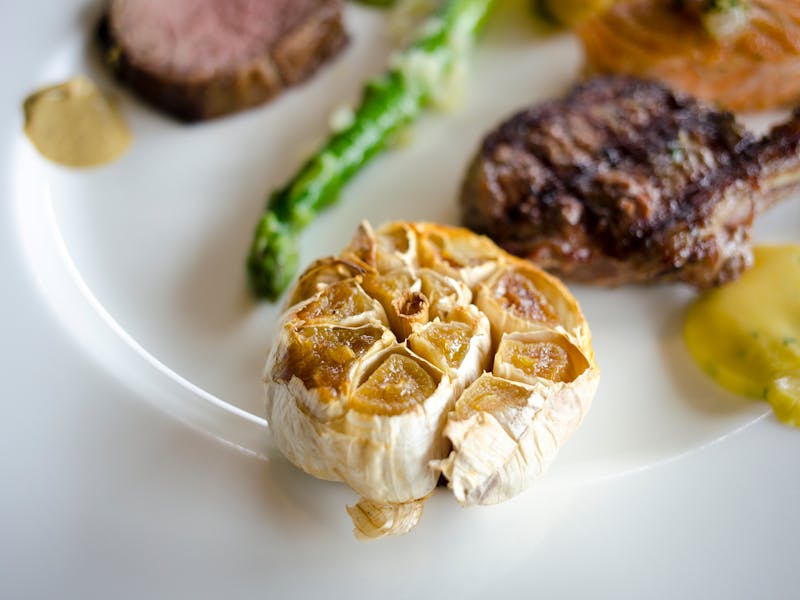
- raw garlic contains more active compounds
- cooked garlic is gentler on digestion
Both forms can be beneficial.
How much garlic per day?
A typical amount is:
- 1–2 cloves per day
This is enough to provide benefits without increasing the risk of side effects.
Garlic supplements
Supplements are available, but their quality varies. Whole garlic in food is usually the better option for most people.
Who Should Be Careful?
Some individuals should be more cautious with garlic:
- people taking blood-thinning medications
- those with sensitive digestion
- individuals preparing for surgery
- older adults taking multiple medications
Quick Summary
| Effect | Does Garlic Help? |
|---|
| Increase estrogen levels | No |
| Support hormonal balance | Yes |
| Help menopause symptoms | Possibly |
| Improve cardiovascular health | Yes |
Learn More About Garlic


FAQ ( Frequently Asked Questions )
Does raw garlic increase estrogen faster?
No. Raw garlic contains more active compounds, but it does not increase estrogen levels.
Can garlic help with hormonal imbalance?
Garlic may support overall balance through its effects on inflammation and metabolism, but it is not a direct treatment.
Is garlic good during menopause?
It can support overall health, especially cardiovascular function, but its effect on symptoms varies.
Can garlic replace hormone therapy?
No. Garlic does not replace hormone therapy and should not be used as a substitute for medical treatment.
How long does garlic take to affect hormones?
Garlic works gradually. Its effects are related to long-term dietary habits rather than immediate changes.
Final Thoughts
Garlic does not increase estrogen levels, but it may help the body maintain better hormonal balance. Its benefits come from supporting systems like metabolism, circulation, and inflammation control rather than acting as a hormone itself.
For those dealing with menopause or low estrogen, garlic can be a useful part of a healthy diet. Just keep expectations realistic—it supports the body, but it does not replace medical treatments or directly raise hormone levels.
Sources
The information in this article is based on findings from medical and scientific sources, including the following:
- National Institutes of Health – Garlic and health outcomes, including cardiovascular and metabolic effects
- National Center for Biotechnology Information – Research on garlic’s antioxidant and anti-inflammatory properties and their role in hormone-related health
- Cleveland Clinic – Garlic benefits, risks, and its effects on heart health and inflammation
- Harvard T.H. Chan School of Public Health – Nutrition insights related to garlic and chronic disease prevention
- PubMed – Studies on garlic and postmenopausal women, including cardiovascular and metabolic markers
- World Health Organization – General dietary recommendations and the role of plant-based foods in long-term health