
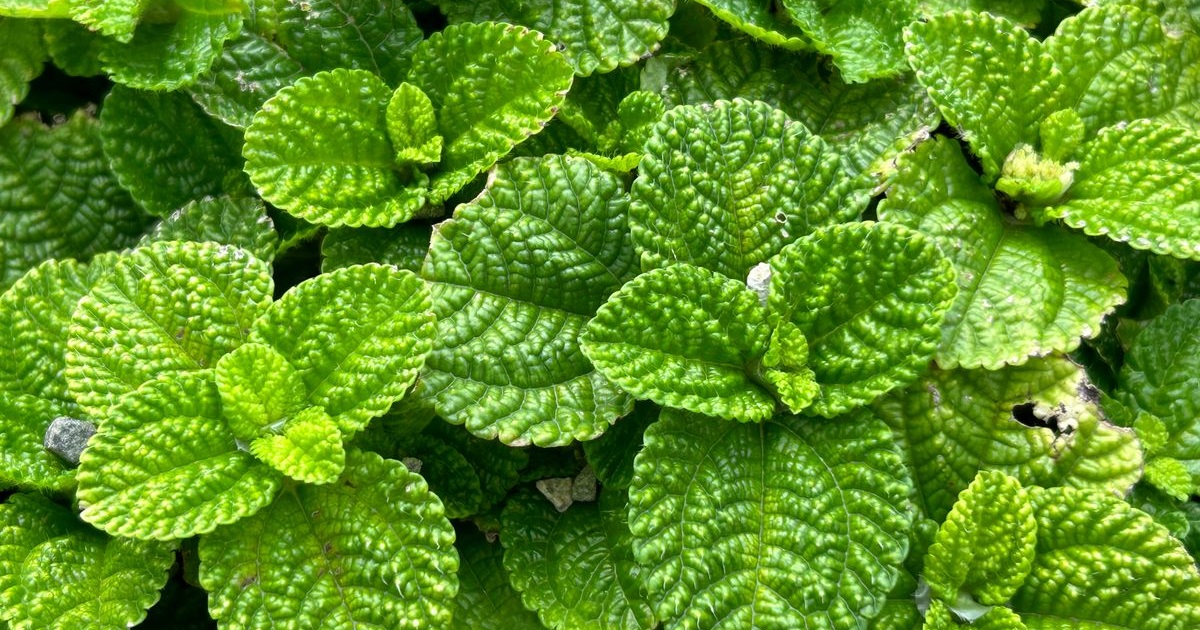
Yes, lemon balm may help lower blood pressure, and there is some human research supporting this possibility. However, the evidence is still limited, and the results from studies using concentrated lemon balm preparations cannot simply be applied to an ordinary cup of lemon balm tea.
Lemon balm (Melissa officinalis) has traditionally been used as a calming herb, and its effects on relaxation may be relevant to blood pressure. Researchers have also investigated whether lemon balm itself can influence systolic and diastolic blood pressure.
If you are new to this herb, start with our complete guide to Lemon Balm (Melissa officinalis): Health Benefits, Uses, and Bioactive Compounds, which covers its main compounds, traditional uses, and possible health effects.
Can Lemon Balm Lower Blood Pressure?
Research suggests that lemon balm can lower blood pressure under some conditions, particularly when concentrated preparations are used.
This does not mean that drinking lemon balm tea will necessarily produce a noticeable drop in blood pressure.
The evidence comes mainly from relatively small clinical studies. Some have reported reductions in systolic and diastolic blood pressure, while broader reviews have found a more consistent effect on systolic pressure than diastolic pressure.
There is therefore a reasonable scientific basis for further research, but not enough evidence to consider lemon balm a proven treatment for hypertension.
What Does the Research Say About Lemon Balm and Blood Pressure?
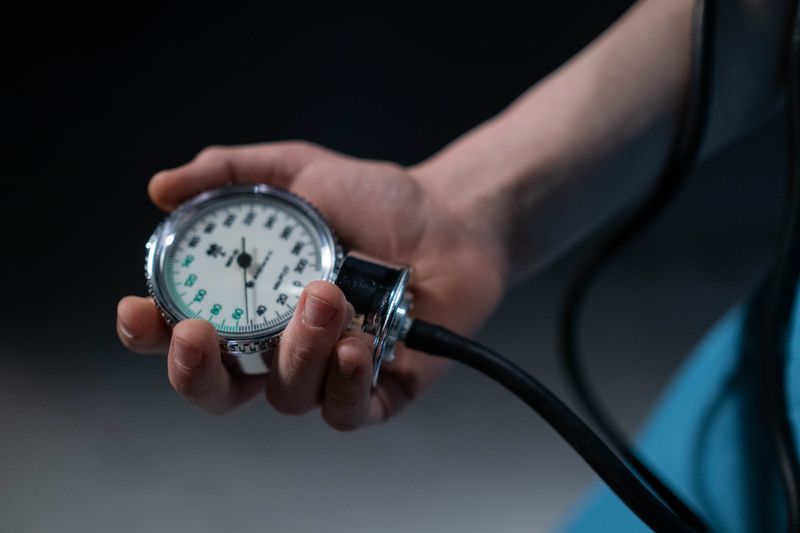
One of the most relevant studies was a double-blind, randomized crossover clinical trial published in Phytotherapy Research in 2021.
The study involved 49 people with essential hypertension. Participants received either lemon balm capsules or placebo for four weeks, followed by a two-week washout period and then the opposite treatment.
The lemon balm preparation was given at 400 mg three times daily, for a total of 1,200 mg per day.
The researchers reported significant reductions in both systolic and diastolic blood pressure after the lemon balm phase compared with placebo.
For example, in one treatment sequence, systolic blood pressure fell from about 152 mmHg at baseline to about 130 mmHg after four weeks of lemon balm. Diastolic pressure fell from about 96 to 80 mmHg.
Those numbers are interesting, but they need to be interpreted carefully.
The study was relatively small, lasted only four weeks for each treatment phase, and used capsules containing a specific preparation of lemon balm. That is very different from drinking a cup of tea made from a few grams of dried leaves.
A newer clinical trial
More recent evidence also points in the same direction.
A 2025 randomized, triple-blind clinical trial included 105 people with stage 1 hypertension. Participants received either Melissa officinalis extract, Echium amoenum extract, or placebo for four weeks.
The lemon balm group showed an average reduction of about 8 mmHg in systolic blood pressure and 4 mmHg in diastolic pressure over the study period.
Again, this was an extract rather than ordinary lemon balm tea. The study is encouraging, but one relatively short clinical trial does not establish how lemon balm would work over months or years.
What Does a Review of the Research Say?
A 2020 systematic review and meta-analysis looked at randomized controlled trials involving Melissa officinalis and cardiometabolic outcomes.
The researchers identified seven eligible randomized trials.
For blood pressure, the pooled analysis found a significant reduction in systolic blood pressure, while the effect on diastolic blood pressure was not statistically significant.
That distinction is worth noting.
The authors also pointed out important limitations, including the small number of studies and a considerable risk of bias in several of them. They concluded that better-quality clinical trials are needed before firm conclusions can be made.
So the overall picture is promising, but not settled.
How Might Lemon Balm Affect Blood Pressure?
There are several possible explanations, although not all have been demonstrated in human blood-pressure studies.
Lemon balm contains compounds such as:
- rosmarinic acid,
- flavonoids,
- phenolic compounds,
- and volatile components in its essential oil.
The plant is also traditionally associated with relaxation and reduced nervous tension.
This could matter because stress and acute nervous system activation can temporarily increase blood pressure.
If lemon balm helps a person relax, that could potentially influence blood pressure indirectly.
However, this should not be confused with a direct antihypertensive effect.
Lower stress and lower blood pressure can occur together without proving that lemon balm directly treats hypertension.
Does Lemon Balm Tea Lower Blood Pressure?
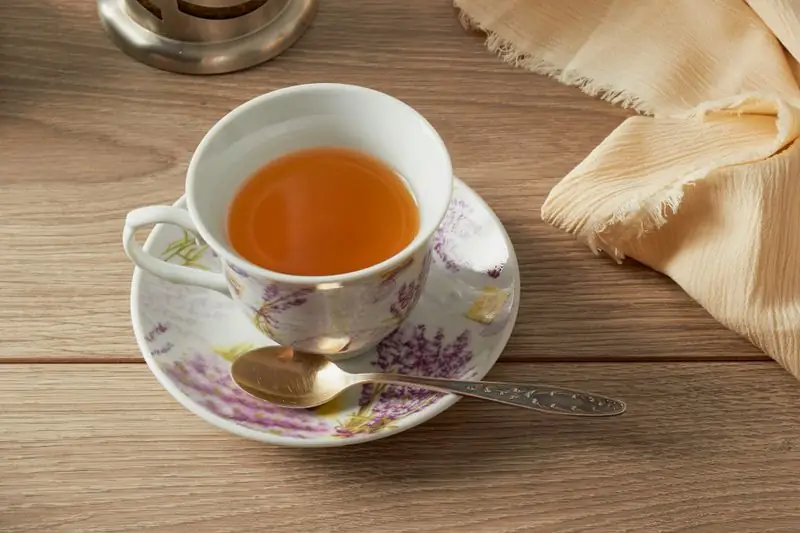
This is where the evidence becomes much less certain.
Most of the clinical evidence involving blood pressure has used capsules or concentrated extracts, rather than a normal cup of lemon balm tea.
A tea is much more variable.
Its strength depends on:
- how much herb you use,
- whether the leaves are fresh or dried,
- how finely they are cut,
- water temperature,
- steeping time,
- and the quality of the herb.
For that reason, you cannot take a study using 1,200 mg of a standardized preparation and assume that a cup of tea contains an equivalent amount of active compounds.
Lemon balm tea may still be a pleasant way to consume the herb, particularly as part of an evening routine. But there is not enough evidence to say that a particular number of cups per day will reliably lower blood pressure.
Fresh Lemon Balm vs. Dried Lemon Balm
Fresh and dried lemon balm are not chemically identical.
Fresh leaves contain more water and generally have a stronger aroma because of their volatile oils. Drying reduces moisture and can also reduce some of the more delicate aromatic compounds.
For tea, properly dried lemon balm is practical and can still retain many plant compounds.
Fresh lemon balm is particularly useful when you want:
- a stronger fresh aroma,
- a lighter flavor,
- or to use the herb in food and drinks.
For a more detailed comparison, see our guide to fresh vs. dried lemon balm, including what happens to its aroma and essential oils during drying.
The important point for blood pressure is that there is no good evidence showing that fresh lemon balm lowers blood pressure better than dried lemon balm.
Lemon Balm Tea vs. Lemon Balm Extract
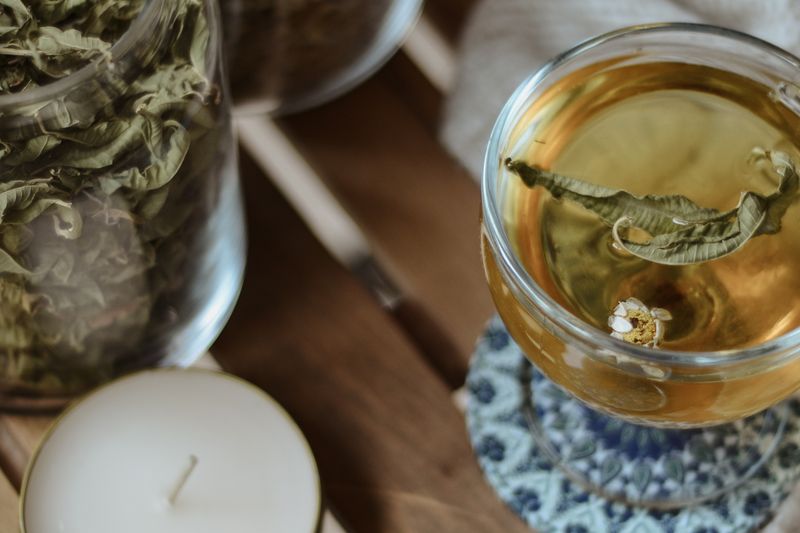
This is probably the most important distinction in the entire article.
Lemon balm tea
Tea is a relatively mild preparation. You are extracting water-soluble compounds from the leaves, along with some other plant components.
The final concentration varies considerably.
Dried lemon balm
Dried leaves are more concentrated by weight simply because most of their water has been removed.
They are commonly used to make tea or herbal preparations.
Fresh lemon balm
Fresh leaves contain more water and tend to have a stronger aroma. They are excellent for culinary use and fresh infusions.
Lemon balm extract
Extracts are more concentrated and can be prepared using different solvents and extraction methods.
This is the form used in several clinical studies.
That means a positive study involving lemon balm extract does not prove that the same effect will occur after drinking ordinary lemon balm tea.
Lemon balm capsules
Capsules can contain measured amounts of powdered herb or extract.
They may therefore provide a more consistent dose than tea, but the amount of active compounds depends on the product and manufacturing method.
For this reason, “lemon balm” is not really one single preparation when we talk about research.
Can Lemon Balm Help With High Blood Pressure?
Possibly, but it should be viewed as a potential complementary approach rather than a treatment for hypertension.
The human studies are encouraging enough to justify further research, especially because some trials have found meaningful reductions in blood pressure.
At the same time, the studies are relatively small and short.
We still need larger trials that can answer questions such as:
- How much lemon balm is needed?
- Does the effect continue after several months?
- Does lemon balm work in people with different stages of hypertension?
- Is tea effective, or is a concentrated extract necessary?
- How does lemon balm compare with established lifestyle interventions?
Until those questions are answered, it is better to describe lemon balm as promising but not proven.
Does Lemon Balm Lower Blood Pressure Immediately?
There is no good evidence that lemon balm produces a predictable, immediate drop in blood pressure after one cup of tea.
Blood pressure naturally changes throughout the day.
It can be affected by:
- stress,
- physical activity,
- caffeine,
- sleep,
- hydration,
- body position,
- and even the process of measuring it.
So a lower reading after drinking lemon balm does not necessarily mean that the herb caused the change.
The clinical studies that found benefits measured blood pressure over weeks, not just minutes after consuming lemon balm.
That is an important difference.
Can Lemon Balm Lower Blood Pressure Through Relaxation?
This is one of the more interesting possibilities.
Lemon balm has a long history of use as a calming herb. Modern research has also investigated its effects on anxiety, stress, and sleep.
For more on this side of the plant, see our articles:
- Lemon Balm and Chamomile For Sleep, Benefits and Recipe.
- Combination of Lemon Balm and Valerian Root For Sleep.
- Lemon Balm and Lemon Verbena For Sleep, Differences, and How to Use Them Together.
- Lemon Balm for Sleep: Dosage and Benefits
The connection with blood pressure is indirect.
Stress can temporarily raise blood pressure, particularly when the nervous system is highly activated. If a person becomes calmer, their blood pressure may also fall.
But this does not mean that lemon balm should be described as a treatment for stress-related hypertension.
It is more accurate to say that relaxation may be one possible pathway through which lemon balm could influence blood pressure.
Can Lemon Balm Be Used With Blood Pressure Medication?
This is an area where caution makes sense.
There is limited information about interactions between lemon balm and cardiovascular medications. Because some studies suggest that lemon balm may lower blood pressure, combining a concentrated preparation with blood-pressure-lowering medication could theoretically contribute to blood pressure becoming too low.
That does not mean that a clinically important interaction has been established.
It means that people taking medication for hypertension should not start high-dose lemon balm extracts simply because a study reported lower blood pressure.
If you take prescription blood-pressure medication, especially several medicines at once, discuss regular use of concentrated lemon balm products with your doctor or pharmacist.
This is particularly important if you experience:
- dizziness,
- weakness,
- faintness,
- unusually low blood pressure,
- or changes in your usual blood-pressure readings.
How Much Lemon Balm Should You Take for Blood Pressure?
There is no established standard dose of lemon balm for lowering blood pressure.
Clinical studies have used different preparations and doses.
For example, the 2021 hypertension trial used 1,200 mg per day of a lemon balm capsule preparation, divided into three doses.
That does not mean that 1,200 mg of dried lemon balm tea would have the same effect.
The type of preparation matters just as much as the number of milligrams.
For that reason, I would not recommend a specific lemon balm dose for treating high blood pressure based on the current evidence.
Is Lemon Balm Safe for People With High Blood Pressure?
Lemon balm has generally been well tolerated in short-term clinical studies, but “natural” does not automatically mean risk-free.
Mild adverse effects have been reported in some studies and reviews, including:
- headache,
- digestive symptoms,
- reduced alertness,
- and, less commonly, other reactions depending on the preparation and dose.
Concentrated extracts deserve more caution than a culinary amount of fresh leaves.
There is also limited information about interactions with some medicines.
People who are pregnant or breastfeeding, children, and people taking several medications should be particularly cautious with concentrated herbal preparations because safety data are more limited.
Lemon Balm and Blood Pressure vs. Garlic
Lemon balm is not the only food or herb that has been studied in relation to blood pressure.
Garlic has a much larger body of research in this area, particularly concerning aged garlic extract and blood-pressure outcomes.
If you are interested in the connection between garlic and cardiovascular health, see our guide to Garlic and Heart Health.
We also have a more specific article examining How Much Garlic Per Day Has Been Studied in Relation to Blood Pressure.
The comparison is useful because it shows why the exact preparation matters. Research on a standardized garlic extract or a concentrated lemon balm extract does not necessarily tell us what will happen when someone simply adds the fresh food or herb to their diet.
What Does the Evidence Really Tell Us?
The research on lemon balm and blood pressure is more interesting than many general herbal-health claims suggest.
There are several human trials showing reductions in blood pressure, including a randomized crossover study in people with essential hypertension and a newer clinical trial involving stage 1 hypertension.
A systematic review and meta-analysis also found a significant reduction in systolic blood pressure across the available randomized trials.
But there are still important gaps.
We do not know whether ordinary lemon balm tea reliably lowers blood pressure.
We do not know the ideal dose.
We do not know whether the effects remain with long-term use.
And we do not yet have enough high-quality evidence to recommend lemon balm as a treatment for hypertension.
Can Lemon Balm Lower Blood Pressure? The Bottom Line
Lemon balm may lower blood pressure, and several clinical studies have reported reductions in systolic and diastolic blood pressure. However, the evidence is still limited, and most of the research has involved concentrated preparations rather than ordinary lemon balm tea.
The simplest way to look at the evidence is:
- Lemon balm extract: the most relevant form in clinical research.
- Lemon balm capsules: can provide a measured amount, but the formulation varies.
- Dried lemon balm: commonly used for tea, but the blood-pressure effect is not well established.
- Fresh lemon balm: useful as a culinary herb, but there is little evidence that eating fresh leaves lowers blood pressure.
- Lemon balm tea: potentially useful as part of a relaxing routine, but its blood-pressure effect has not been clearly established.
So, if you enjoy lemon balm tea, there is no reason to avoid it simply because you are interested in cardiovascular health. But it should not replace prescribed blood-pressure treatment or proven lifestyle measures.
The research is promising. It is just not complete yet.
Readers Also Enjoyed

Frequently Asked Questions
Can lemon balm lower blood pressure?
Possibly. Several human studies have reported reductions in blood pressure after taking lemon balm preparations, but the evidence remains limited.
Does lemon balm tea lower blood pressure?
It has not been established that ordinary lemon balm tea reliably lowers blood pressure. Most clinical studies have used capsules or extracts rather than standard tea.
Can lemon balm help with high blood pressure?
It may have a supportive effect, but there is not enough evidence to consider lemon balm a treatment for hypertension.
Does lemon balm lower blood pressure immediately?
There is no good evidence that it produces a predictable immediate reduction in blood pressure. Clinical studies showing benefits generally measured changes over several weeks.
How much lemon balm should you take for blood pressure?
There is no established dose. Clinical studies have used different preparations, so doses from one study cannot simply be converted into an equivalent amount of tea.
Can you take lemon balm with blood pressure medication?
There is limited evidence about interactions. Because lemon balm may potentially affect blood pressure, people taking blood-pressure medication should discuss regular use of concentrated extracts with a doctor or pharmacist.
Is lemon balm safe if you have high blood pressure?
Lemon balm has generally been well tolerated in short-term studies, but concentrated preparations can have different effects from culinary amounts or tea. People taking medication should use caution.
Sources
- Shekarriz Z, Shorofi SA, Nabati M, Shabankhani B, Yousefi SS. Effect of Melissa officinalis on systolic and diastolic blood pressures in essential hypertension: A double-blind crossover clinical trial. Phytotherapy Research. 2021;35(12):6883–6892.
- Jafari Dehnayebi M, Zeidy P, Shamsikhani S, et al. Comparison of the effects of Echium amoenum and Melissa officinalis on hypertension in stage 1 hypertensive patients: A randomized, triple-blind, three-arm clinical trial. Complementary Therapies in Medicine. 2025;95:103266.
- Effects of Melissa officinalis (Lemon Balm) on cardio-metabolic outcomes: A systematic review and meta-analysis. Phytotherapy Research. 2020.
- Melissa officinalis L. as a Nutritional Strategy for Cardioprotection. Review of cardiovascular effects, safety, and possible interactions.
- National and European herbal-medicine resources and clinical literature on Melissa officinalis.

Pingback: Lemon Balm Benefits, Uses, Side Effects, and Bioactive Compounds
Pingback: How Much Garlic Per Day to Lower Blood Pressure? 1 or 2 Cloves?